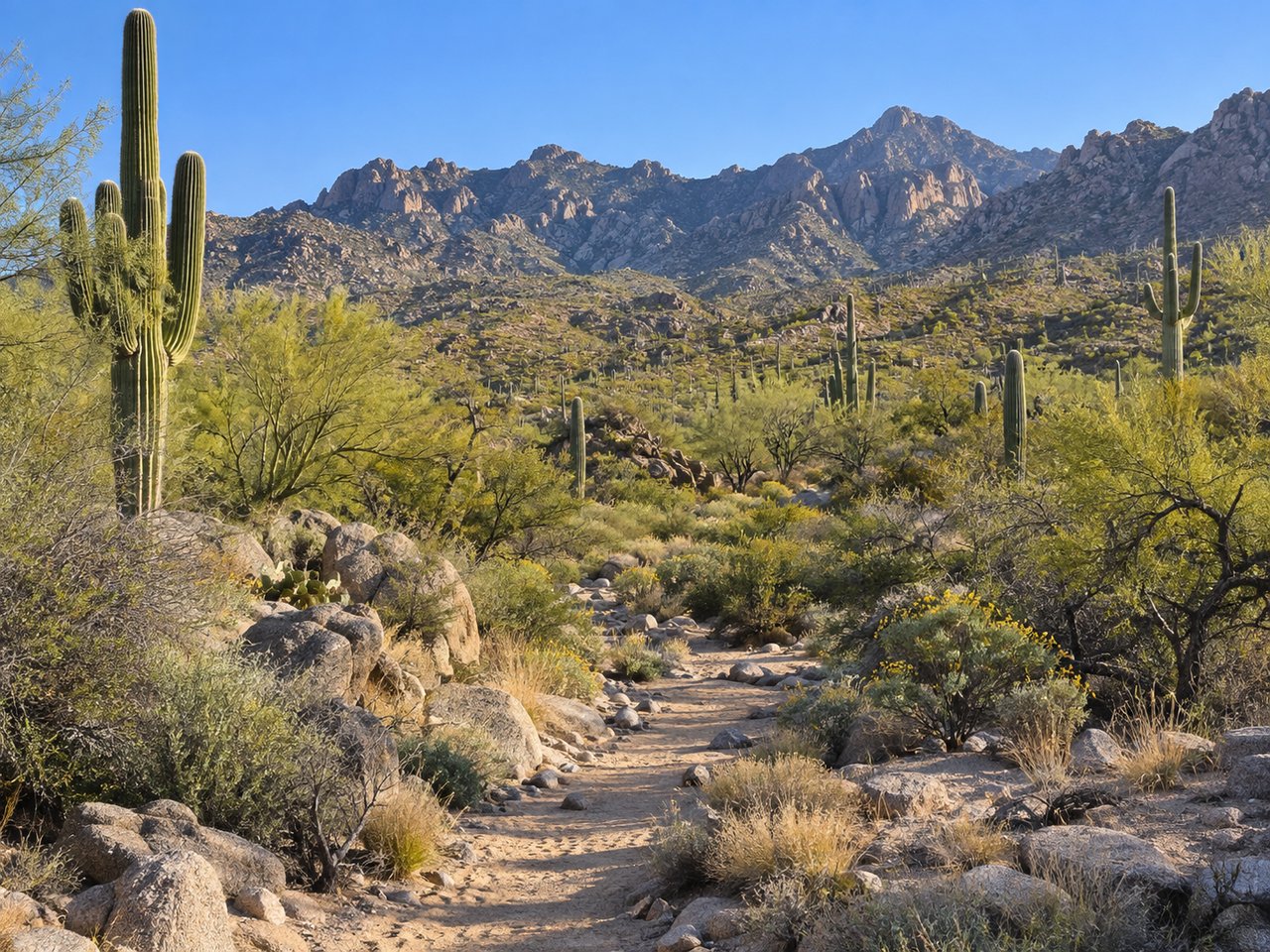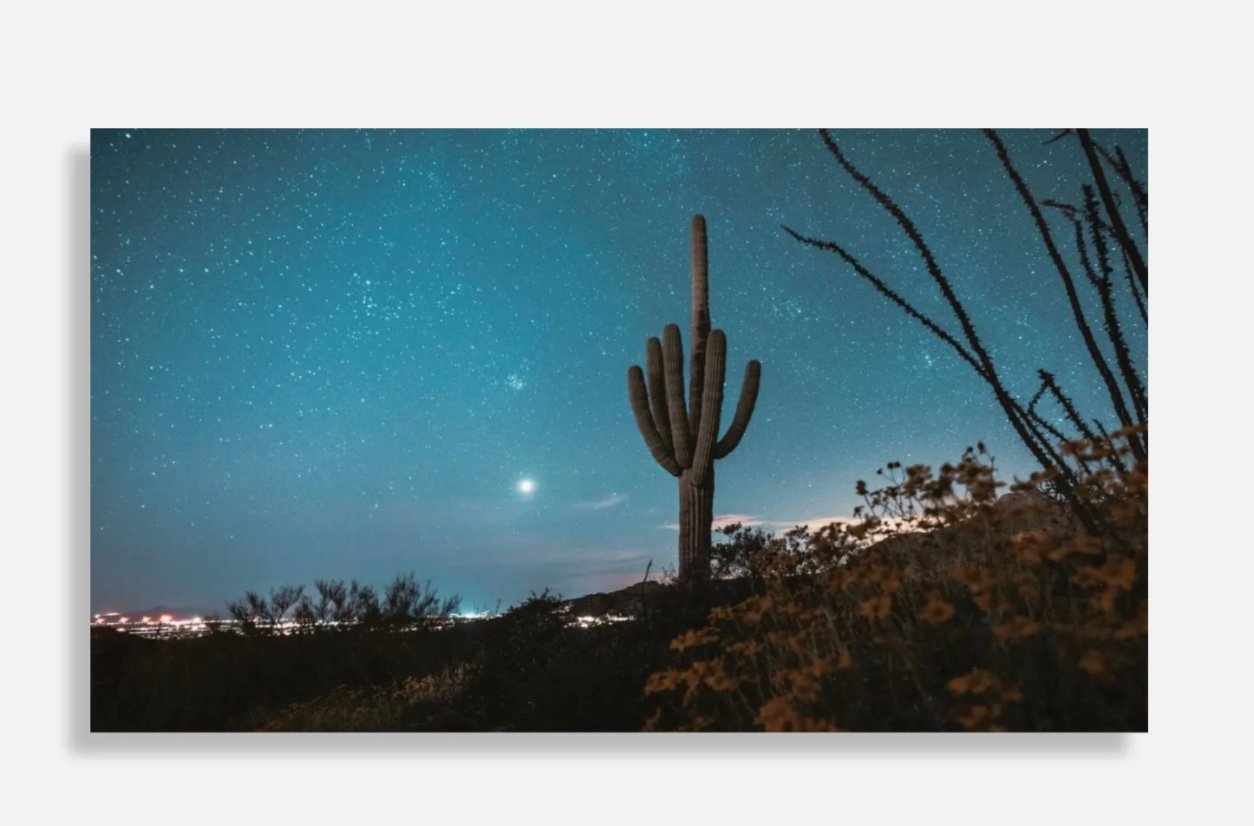
On a clear July evening in the Tortolita Mountains, the first point of light may arrive before the stars. Venus is enjoying its best evening visibility of 2026, holding above Tucson until around 10 p.m. As the sky deepens, the summer Milky Way begins to emerge across the darkness.
That darkness can feel elemental, as if it belongs entirely to the desert. It does not.
The night sky above Tucson is maintained infrastructure. For more than half a century, public policy, astronomical research, municipal engineering, conservation groups, and individual property owners have made deliberate choices about where light belongs. The principle has remained remarkably consistent: illuminate the ground without surrendering the sky.
July offers a particularly clear way to experience what those choices have protected.
Tucson Learned to Aim Light Downward
Tucson and Pima County adopted astronomy-oriented outdoor-lighting ordinances in 1972. DarkSky International credits astronomer Art Hoag with helping establish what it describes as the first lighting ordinance designed specifically to address light pollution and protect astronomical observation.
The timing matters. Tucson acted before light pollution became a familiar environmental concern. The immediate purpose was practical. Research at Kitt Peak National Observatory and the region’s other observatories depends on the ability to detect faint light arriving across immense distances.
The local commitment soon developed a wider reach.
| Year | Local action | Why it matters now |
|---|---|---|
| 1972 | Tucson and Pima County adopted foundational outdoor-lighting ordinances | Artificial light became a resource to direct and control |
| 1987 | Tucson astronomers David Crawford and Tim Hunter founded the organization now known as DarkSky International | A local concern became an international conservation effort |
| 2017 | Tucson was nearing completion of a major shielded LED streetlight conversion | New technology gave the city finer control over output and direction |
| 2023 | Saguaro National Park became an Urban Night Sky Place | The region earned outside recognition for sustaining an authentic nighttime experience near a major city |
This sequence changes how the Tucson night sky should be understood. Geography created favorable conditions. Decades of decisions helped keep those conditions useful.
Darkness here is neither an absence nor an accident. It is a public asset that has been designed, measured, and continually defended.
The Streetlights Prove the Point
Municipal lighting is where the principle becomes measurable.
By mid-2017, approximately 95% of Tucson’s roughly 18,000 municipal luminaires had been converted to fully shielded 3000 K LED fixtures. According to the published study of that conversion, maximum illumination on the road directly beneath a streetlight fell from 60 lux to 17 lux, a 72% reduction.
The city was not simply turning lights off. It was directing less light more carefully toward the surface that needed it.
A later experiment involving about 20,000 Tucson roadway luminaires tested how changes in streetlight output affected the sky itself. When the system was dimmed from 90% to 30% of full power after midnight, measured zenith brightness fell by approximately 5.4% near the city center and 3.6% at a suburban location.
Those percentages may appear modest until their scale is considered. They represent a measurable change in the sky over an operating city, created by adjusting one part of its lighting system for a portion of the night.
The lesson reaches beyond municipal engineering. Shielding, color temperature, output, timing, and placement all matter. Darkness can be protected fixture by fixture.
July 2026 Is the Month to Look Up
The strongest observing window arrives at midmonth. A new moon occurs on July 14, followed by a very thin crescent on July 15. With little moonlight in the sky from roughly July 13 through July 16, faint stars and the summer Milky Way will have their best opportunity to appear, provided monsoon clouds clear.
The sequence is unusually graceful:
- July 14: New moon and the month’s darkest natural conditions
- July 15: A fine crescent returns to the evening sky
- July 16: The Moon passes near Regulus
- July 17: The Moon passes Venus, the month’s dominant early-evening planet
Venus sets around 10 p.m. in July. Saturn rises near midnight, while Mars is better suited to the hours before dawn. No telescope is required to appreciate the larger composition. A clear sky, restrained nearby lighting, and time for the eyes to adjust will reveal more than hurried viewing ever does.
Late July brings the Southern Delta Aquariids and alpha Capricornids, with activity highlighted around July 30 and 31. Yet the full moon arrives July 29. Its brightness will obscure many faint meteors, making the midmonth new-moon window the stronger choice for experiencing the depth of Tucson’s sky.
There is one honest qualification. Tucson’s official monsoon season runs from June 15 through September 30, and the National Weather Service reported that storm activity was expanding toward the metro during the week of July 11. Any observing plan should remain flexible. When the clouds part, the darker interval around July 14 offers the month’s finest opening.
Astronomy Is Still Part of Tucson’s Daily Culture
The protection of the sky has produced more than research conditions. It has shaped a local culture.
Flandrau Science Center & Planetarium’s Science at Sunset: Songs of Starlight sold out both July 10 and 11. The program joined astronomy, music, presentations, and weather-dependent telescope viewing on the University of Arizona campus. Its reception speaks to an enduring local appetite for the sky as both science and experience.
That culture extends through Steward Observatory, the Richard F. Caris Mirror Lab, Kitt Peak National Observatory, Mount Lemmon SkyCenter, the Tucson Amateur Astronomy Association, and the Tucson Astro Trail. Together, these institutions form a regional network that ranges from public education to advanced research.
For a more intensive experience, Mount Lemmon SkyCenter offers Astronomer Nights using the 0.8-meter Schulman Telescope. The private program accommodates up to four people and includes an astronomer-guide, dinner, lodging, and a full night of telescope access. Availability should be confirmed directly.
Kitt Peak remains essential to the history of Tucson’s lighting standards, although its public nighttime programs pause from July 15 through August 31. This is one reason the sky at home matters. In summer, a thoughtfully lit terrace in the Tortolita foothills can become the most immediate observatory of all.
Darkness Is Habitat
The regional commitment also protects systems that have little to do with telescopes.
The National Park Service explains that natural darkness helps regulate bat activity, bird movement, predator-prey behavior, and moth pollination. Saguaro flowers open at night, tying one of the desert’s defining plants to the rhythms of darkness.
Saguaro National Park’s 2023 certification as the world’s ninth Urban Night Sky Place recognized this wider value. It was only the second National Park Service unit to receive the designation. The certification acknowledges places near significant urban light that still provide an authentic nighttime experience through planning, lighting management, and public stewardship.
The designation belongs to Saguaro National Park, not Saguaro Ranch, and the two are not adjoining properties. Its significance for the Tortolita Mountains is regional. Tucson, Pima County, the University of Arizona, local observatories, DarkSky International, and community organizations have created a shared culture in which darkness is treated as something worth maintaining.
In the Tortolitas, Stewardship Becomes Residential Design
At Saguaro Ranch, the regional ethic is carried into the planning of a private residential community.
More than 80% of its approximately 1,200 acres is preserved. Roads and drainage follow the natural contours of the terrain. Utilities are buried, and exterior lighting is minimized. The tunnel entrance creates a memorable arrival, but the more lasting impression comes after sunset, when fewer developed acres mean fewer local sources of artificial light and broader areas of dark foreground.
No neighborhood-specific sky-brightness measurement or Bortle rating is available for Saguaro Ranch. The more credible claim is also the more meaningful one: the community’s planning and design standards reduce local visual intrusion and protect the conditions that make night-sky viewing possible.
Its dark-sky lighting guidance calls for fully shielded, low-output fixtures, no uplight, warm color temperatures, careful aiming, and controls such as dimmers, timers, and motion sensors. The guidance recommends 2700 K or warmer for most exterior applications, with 2200 K or amber light considered for more sensitive settings. Exact requirements vary by parcel and jurisdiction, so lighting is addressed as part of the design process rather than added at the end.
That same care extends to the residential offering. Moonlight Canyon includes one- to two-acre homesites, complemented by larger multi-acre estate properties. Pre-approved semi-custom plans, curated architectural resources including Robinette Architects, preferred-builder relationships including Miramonte Homes, and select completed residences offer several paths to building or purchasing within the community.
The goal is not brightness at every threshold. It is sufficient, well-placed illumination that preserves comfort, architecture, and the view beyond the walls.
A Sky Best Understood From Beneath It
This month, choose a clear evening near the July 14 new moon. Let nearby exterior lights remain low. Watch Venus hold in the evening sky, then allow enough time for finer stars to appear. The experience will feel quiet, but the system behind it is anything but passive.
More than half a century of ordinances, observatory advocacy, engineering, conservation, and private design discipline has protected that view. At Saguaro Ranch, it is part of a broader promise: preserve the desert first, build with care, and allow the defining qualities of the place to remain visible.
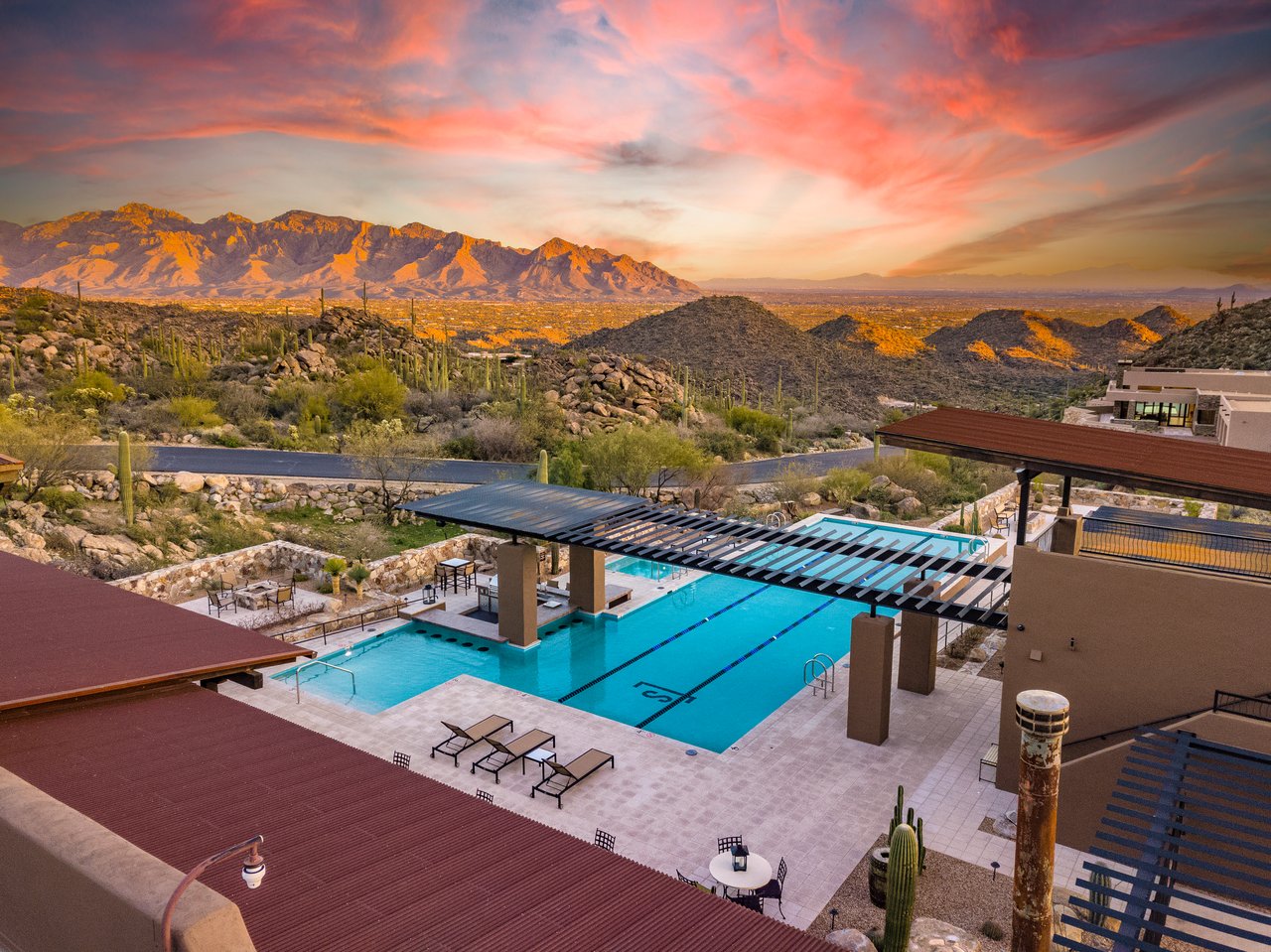
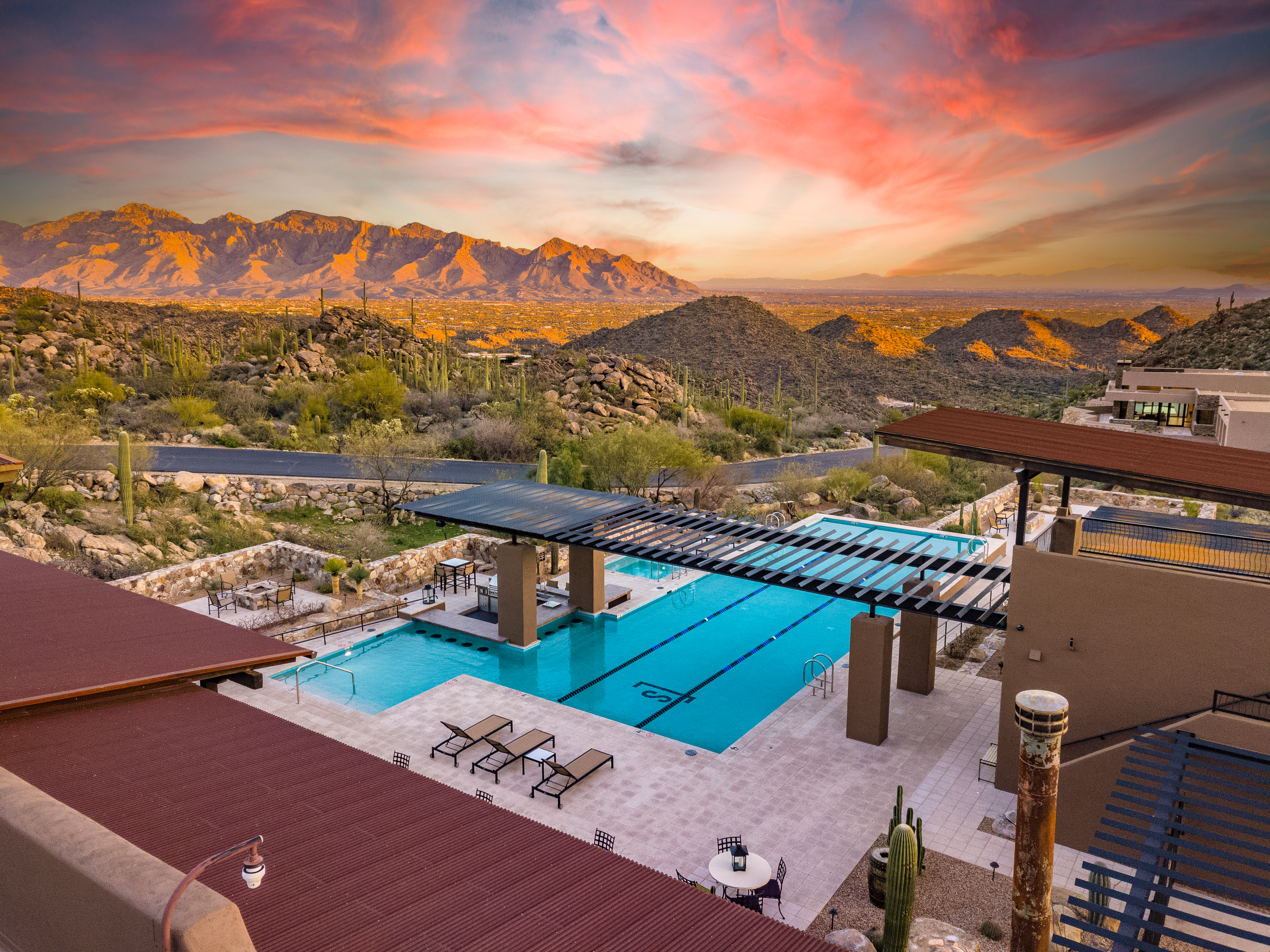
Afterward, the experience can continue at the private Saguaro Ranch Club, with its 25-yard lap pool, jetted spa, fitness center, bocce and pickleball courts, patios, fire features, and mountain views. Here, the night sky is not scheduled programming. It is part of the setting.
To experience the tunnel arrival, explore available homesites and residences, and see how preservation shapes life in the Tortolita Mountains, we invite you to visit in person.