What if Tucson’s best luxury feature is not inside the home at all? In this part of Arizona, the seasons shape how you live, entertain, relax, and even how you notice the sky. If you are considering a high-end home in the Tucson area, understanding the rhythm of the desert can help you picture daily life more clearly. Let’s dive in.
Tucson lives by desert seasons
Tucson does not follow a classic four-season pattern in the way many other parts of the country do. It is a high-desert climate defined more by heat, rainfall timing, cool nights, and changing light than by long winters or steady seasonal shifts.
At Tucson International Airport, the 1991 to 2020 climate normals show an annual average high of 84.0°F, an average low of 57.3°F, and an annual average temperature of 70.6°F. The area averages 10.61 inches of precipitation each year, with 68 days at 100°F or above and 12 days at 32°F or colder. For you as a homeowner, that means the year is less about snow and deep cold and more about how you use shade, morning light, evening air, and outdoor space.
Spring brings Tucson to life
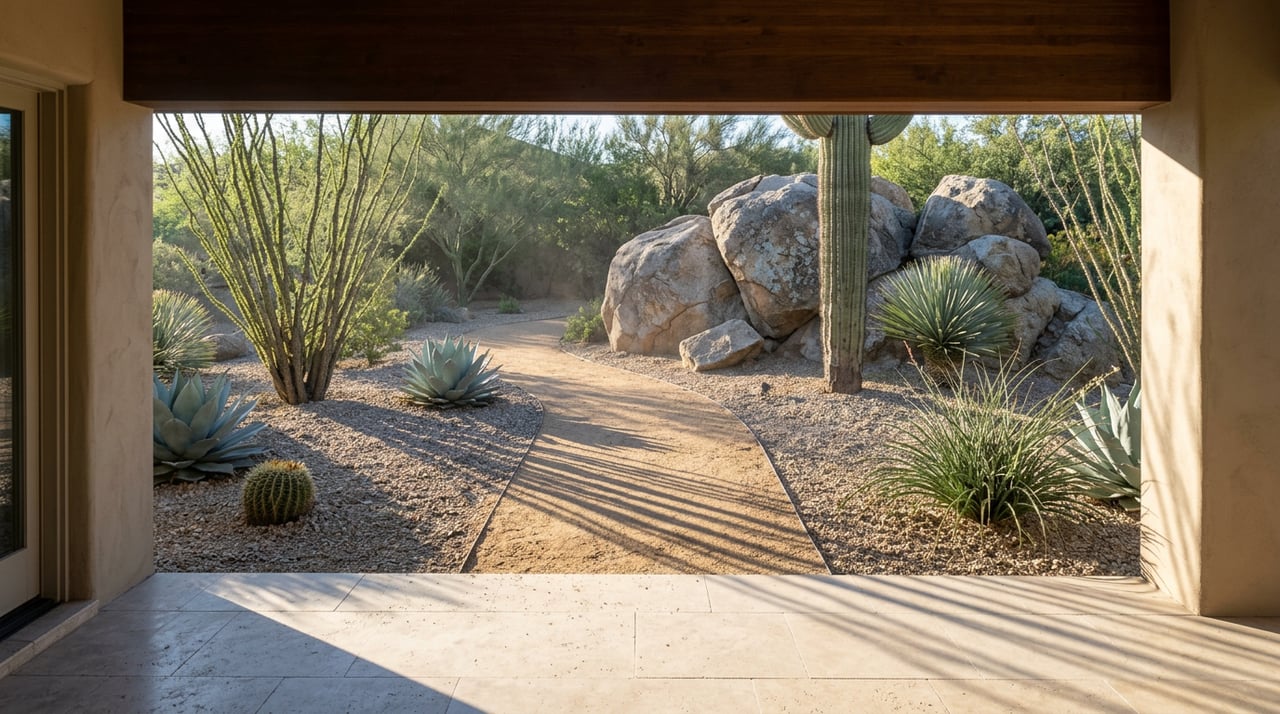
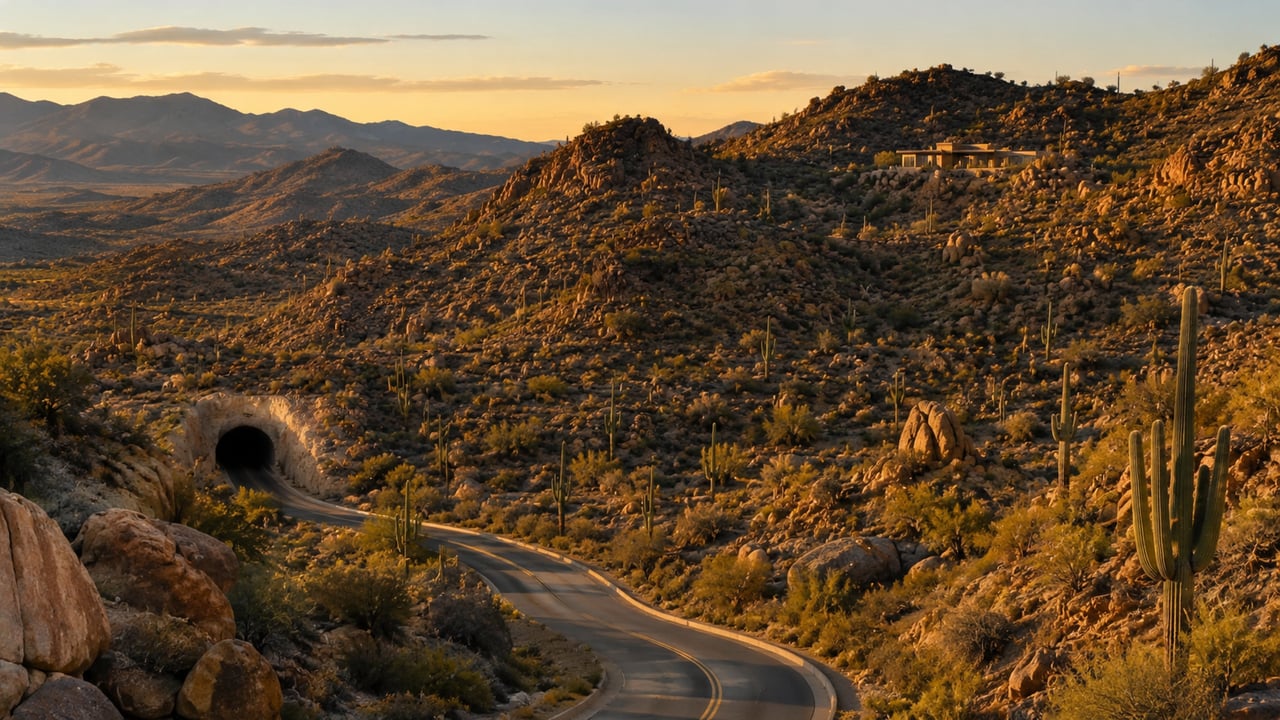
Spring is when the Sonoran Desert feels especially vivid. Near Tucson, the Arizona Upland flowering season runs from mid-February to mid-June, with the usual peak from mid-March through late April depending on rainfall and temperatures (read our guide to the Tortolitas in spring).
This is when winter annuals may color the ground, cacti begin their reliable spring bloom cycle, and palo verde trees add bright seasonal contrast. Blue palo verdes typically turn yellow in late April, foothill palo verdes follow about two weeks later, and saguaros usually bloom from mid-May to mid-June (learn more about the timeless sentinels of Saguaro Ranch).
The weather helps explain why spring feels so inviting. March averages 75.8°F for highs and 48.0°F for lows, April averages 82.9°F and 53.3°F, and May averages 91.8°F and 61.8°F. Those conditions create a season that feels naturally suited to terraces, garden rooms, quiet mornings, and long evenings outdoors.
What spring living can feel like
In a luxury home setting, spring often becomes the season when indoor and outdoor living feel most seamless. Early light is gentle, evenings are comfortable, and the desert itself becomes part of the experience.
You may find that this is the time of year when view corridors matter most. Morning coffee with mountain views, outdoor dining that does not require much planning, and time spent simply watching the landscape change can feel less like special occasions and more like part of your daily routine.
Summer starts with heat
Tucson summer is real desert summer. Before the seasonal rains arrive, heat defines the experience (explore our summer night sky calendar).
The climate normals show June averaging 101.2°F for highs and 71.1°F for lows, July averaging 100.2°F and 76.3°F, and August averaging 98.6°F and 75.2°F. Tucson also records 55 of its 68 annual 100°F-plus days during June, July, and August.
For homeowners, that usually means adjusting the rhythm of the day rather than stepping away from outdoor living altogether. Early mornings, shaded patios, covered outdoor rooms, and late evening use become especially valuable during this part of the year.
Why shade and timing matter
Summer in Tucson is often about strategy. The best outdoor moments tend to happen early, late, or under deep shade.
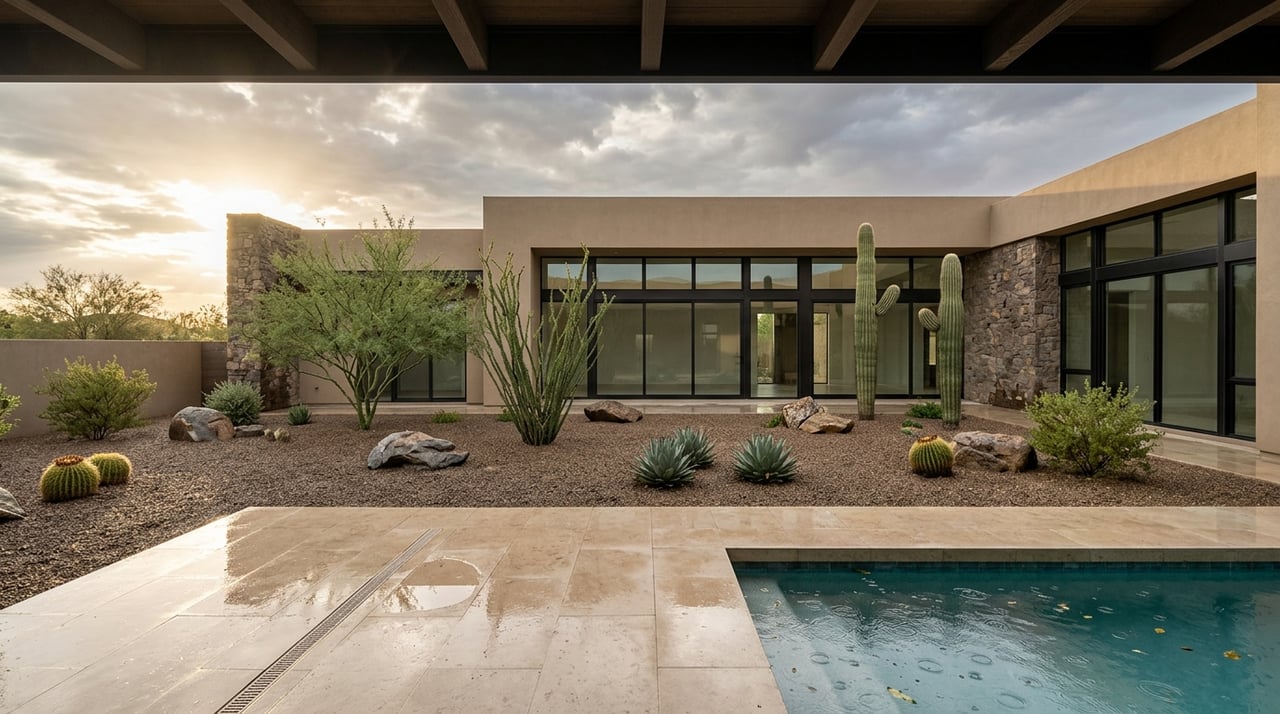
This is one reason architecture and site placement matter so much in desert luxury living. Homes that work with the climate, through orientation, overhangs, and protected outdoor areas, can make the season feel more livable and more intentional.
Monsoon season changes the mood
Locally, monsoon season runs from June 15 through September 30. It begins with extreme heat, followed by moisture that can produce repeated rounds of thunderstorms.
This is not a season of all-day rain. In Tucson, summer rainfall tends to come in bursts and breaks rather than as a steady pattern. University of Arizona Extension notes that summer rains typically begin in late June to early July.
Rain also plays a major role in Tucson’s annual climate pattern. About 54.1% of the city’s average annual precipitation falls from June through September, which tells you just how much the summer rainy season shapes the landscape.
Monsoon season is dramatic and practical
Monsoon weather can be striking, but it also comes with real conditions to plan around. The National Weather Service highlights lightning, high winds, dust storms, wildfires, flash flooding, and outages as recurring hazards during the season.
For you as a homeowner, monsoon awareness is part of living well in the desert. It is a season of dramatic skies and fast-changing weather, but also one that rewards preparation and respect for local conditions.
The desert responds quickly to rain
One of Tucson’s most memorable seasonal shifts happens after the first summer rain. The Sonoran Desert responds quickly, and summer flowering begins a few weeks later and can continue into late fall.
That transformation is part of what makes the region so distinctive. The same landscape that can feel austere in dry heat can look refreshed, textured, and unexpectedly lush after monsoon moisture arrives.
Fall brings gradual relief
Fall in Tucson does not arrive all at once. It cools by degrees, and that slow return to comfort is part of its appeal.
September still averages 95.1°F for highs and 70.4°F for lows, so it can feel like an extension of summer. By October, averages ease to 86.3°F and 59.0°F, and by November they drop to 75.1°F and 47.9°F.
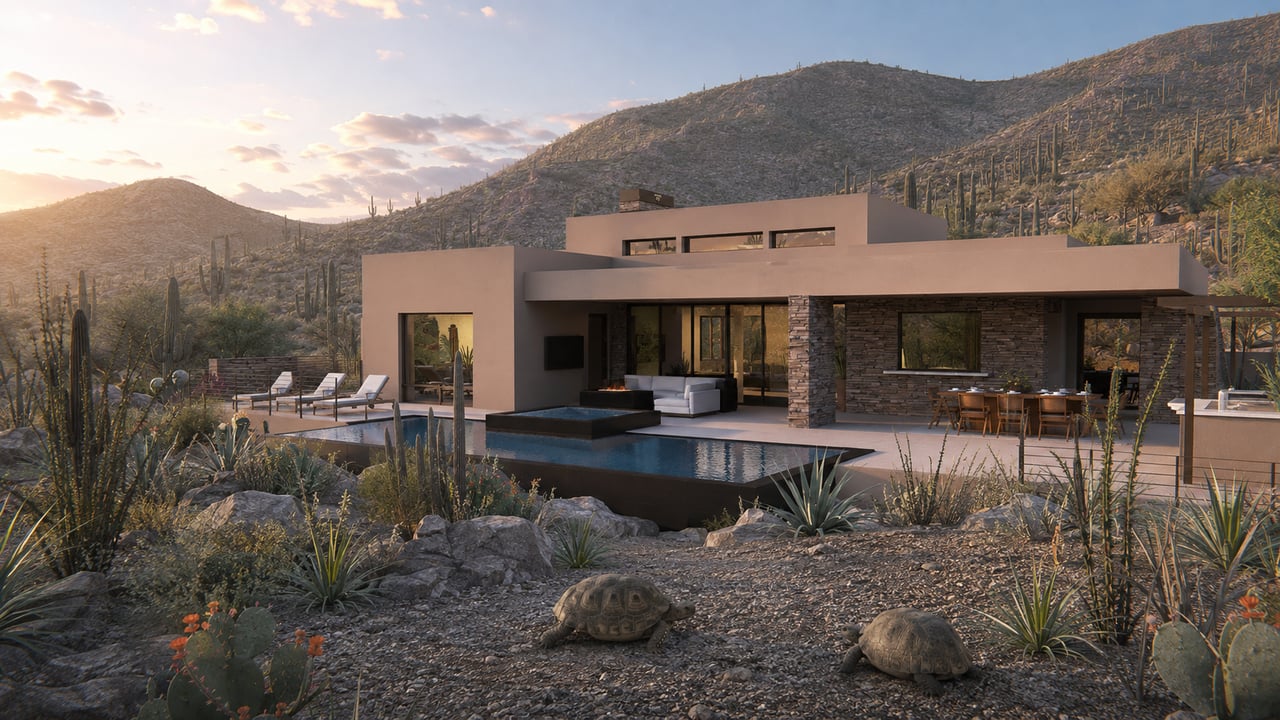
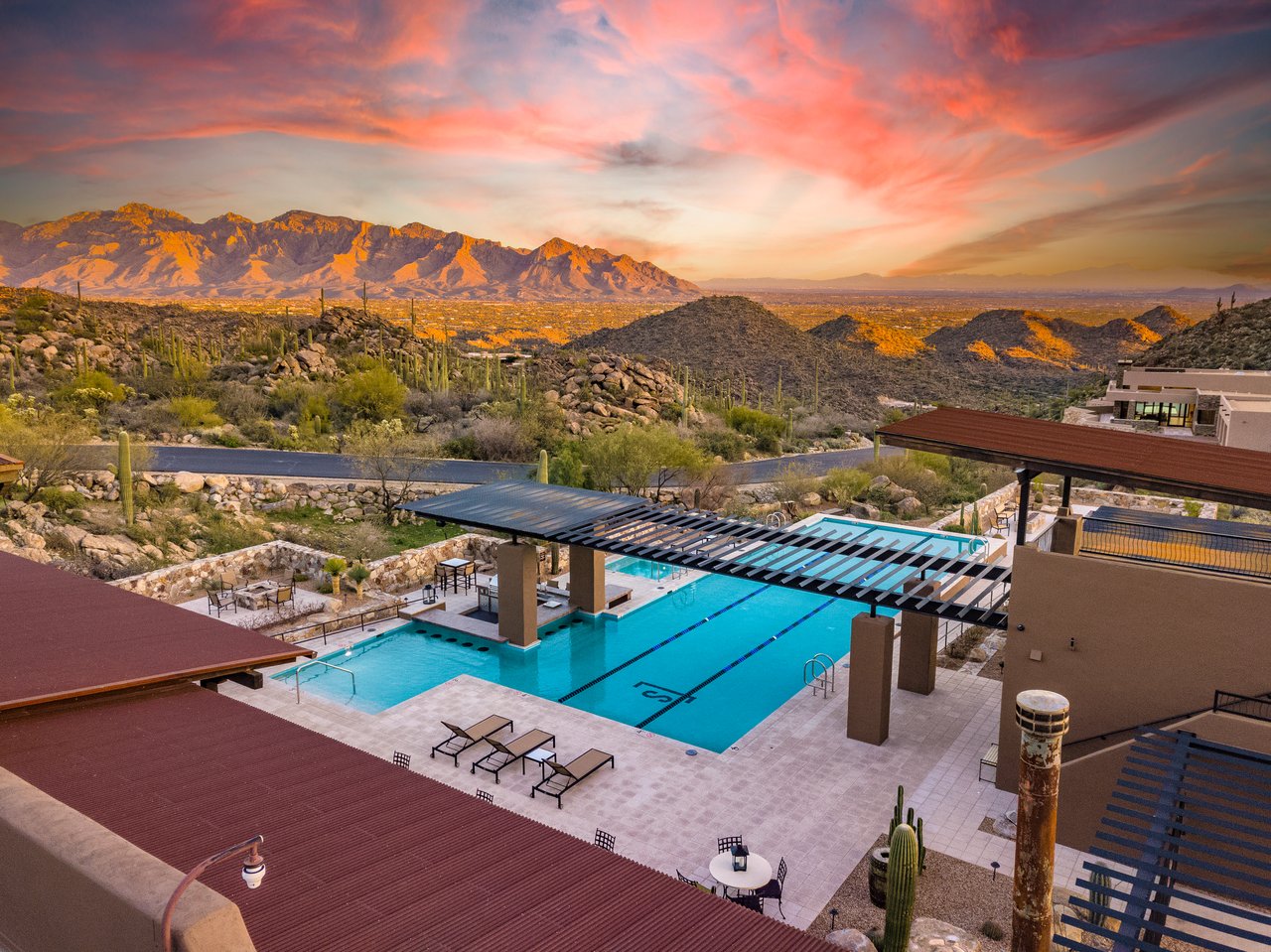
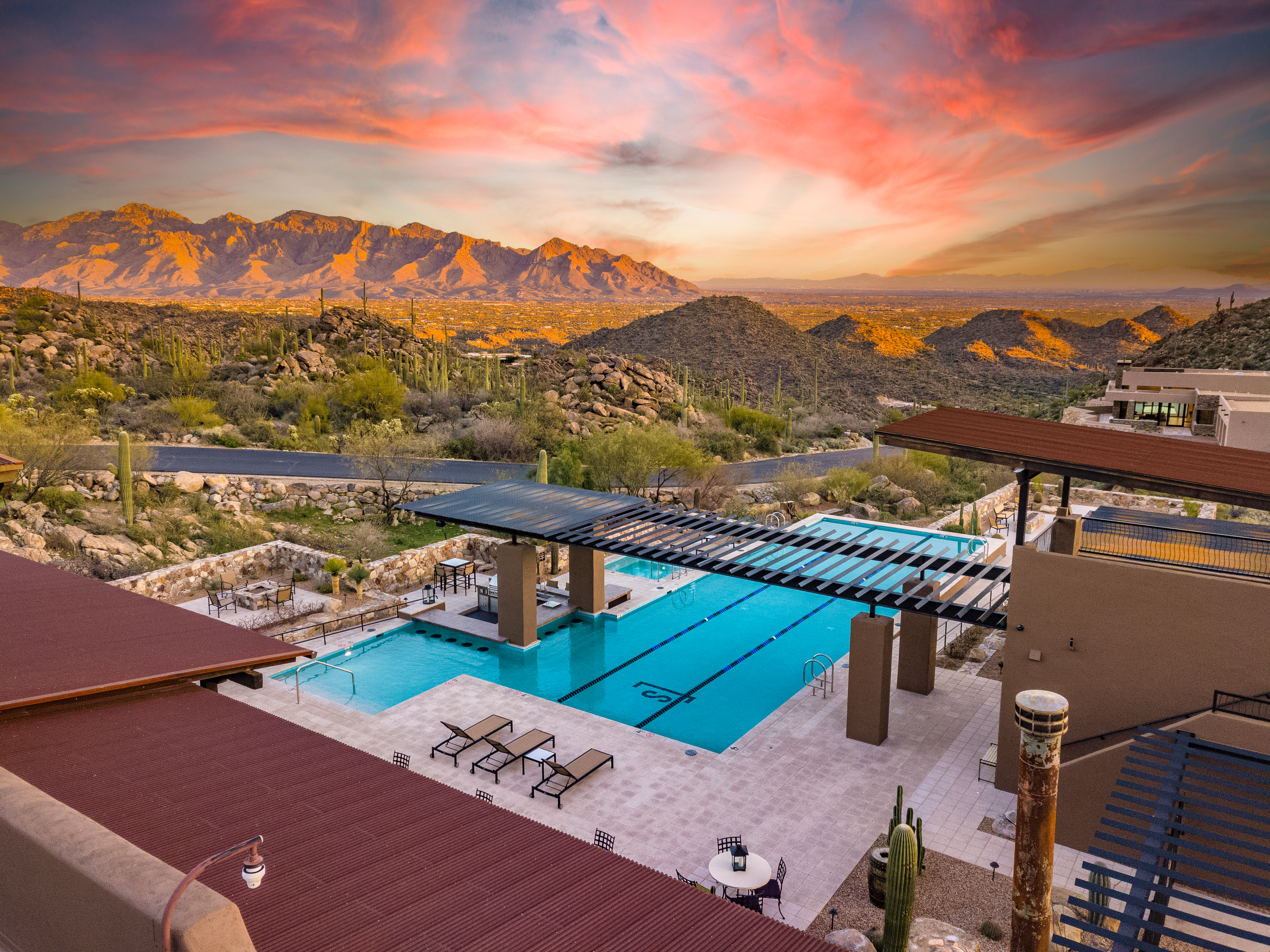
As the daytime heat softens, outdoor living starts to feel effortless again. Patios, poolside seating, outdoor dinners, and evenings by a fire feature become easier to enjoy without the intensity of midsummer sun.
Fall is when outdoor routines expand
For many homeowners, fall marks the return of longer outdoor gatherings and slower evenings. You may spend more time dining outside, hosting guests on the terrace, or simply lingering outdoors after sunset.
In a setting where views, privacy, and preserved desert surroundings matter, this season often highlights the value of the property itself. The home is still central, but the surrounding land and sky begin to take a larger role in daily life again.
Winter is mild, bright, and highly usable
Winter in Tucson is mild by national standards, but it is not uniformly warm. The city averages 12 days at or below freezing each year, mostly between November and March.
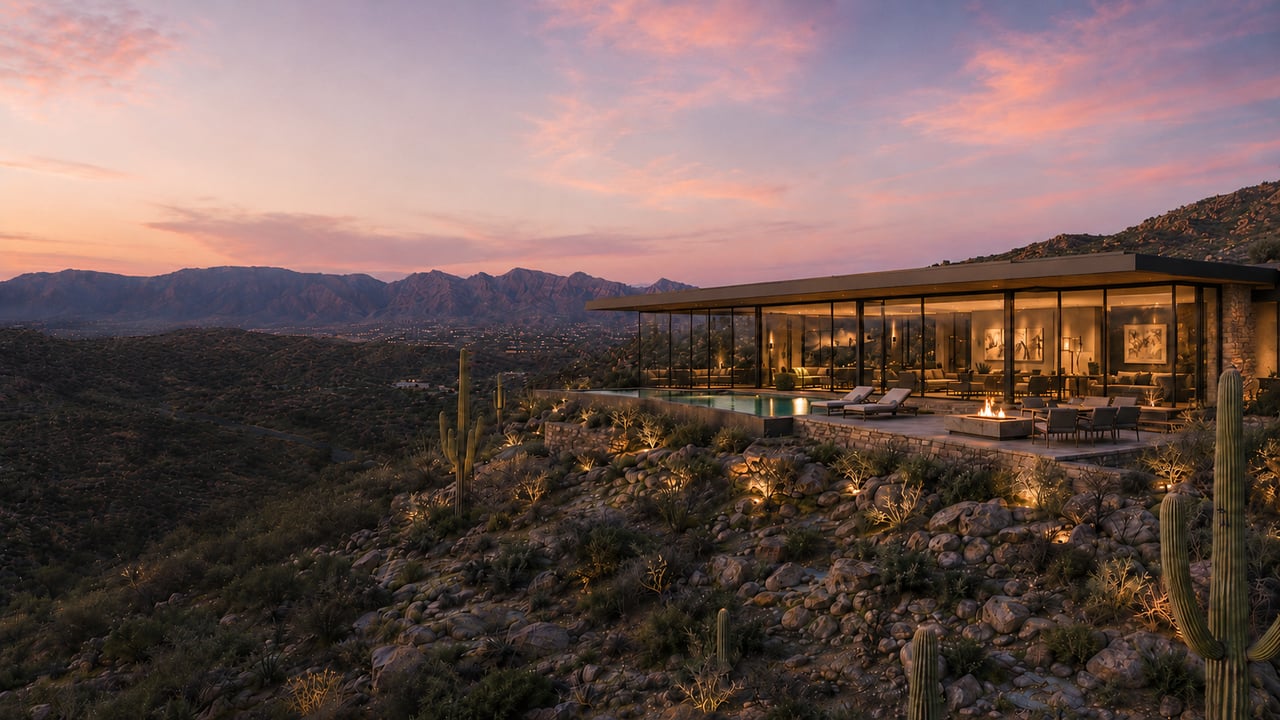
That said, winter is often one of the most enjoyable seasons for being outside. Crisp mornings, mild afternoons, and clear evenings create a pattern that supports outdoor dining, fire pits, and stargazing.
December averages 65.5°F for highs and 40.5°F for lows. That combination often makes winter feel less like a season to avoid and more like a season to savor.
Winter light changes everything
Seasonal light is a major part of Tucson’s living experience. Around the June solstice, the city sees about 14 hours and 15 minutes of daylight, with sunrise around 5:17 to 5:20 a.m. and sunset around 7:33 to 7:34 p.m.
Around the December solstice, daylight drops to roughly 10 hours and 2 minutes, with sunrise around 7:19 to 7:24 a.m. and sunset around 5:22 to 5:29 p.m. That swing helps explain a simple truth about Tucson life: summer is often about managing the sun, while winter is about enjoying it.
Why the setting matters as much as the home
In Tucson, luxury ownership is often tied to more than square footage or finishes. It is tied to how the property frames the landscape, supports outdoor routines, and preserves your connection to the desert through the year (discover elevated desert living).
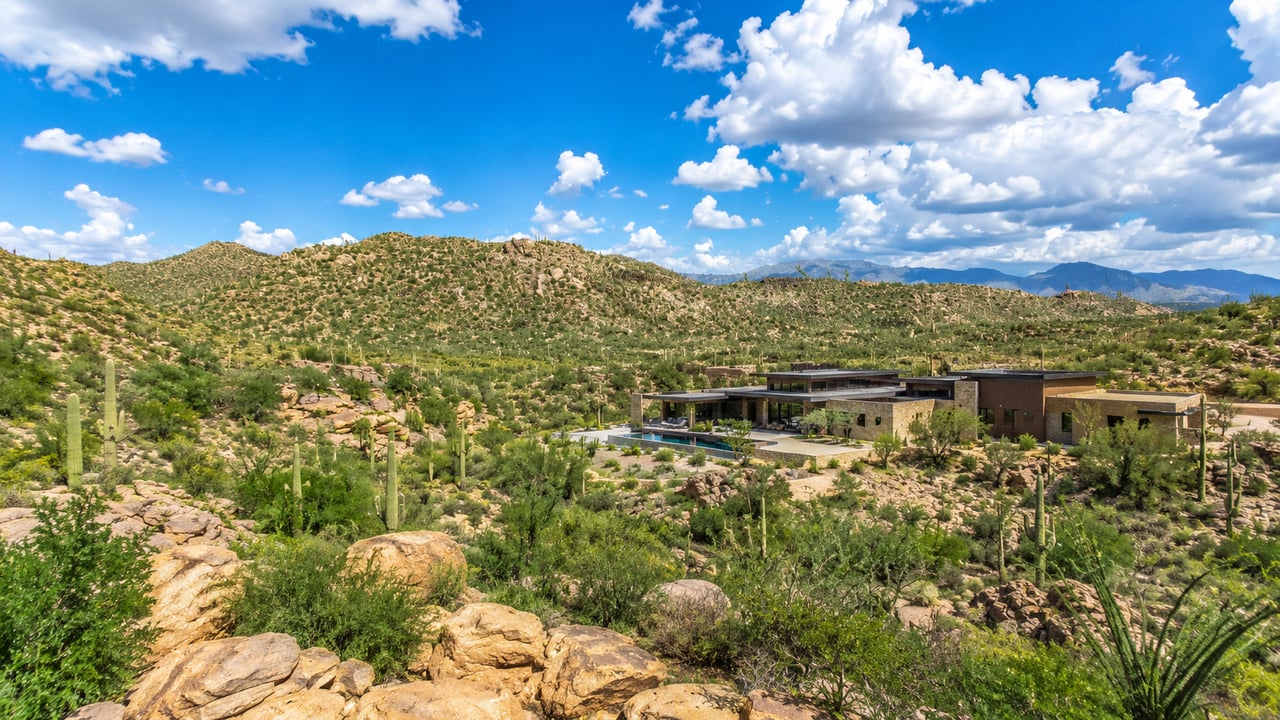
That is especially true in places where the natural environment remains a defining feature of the ownership experience. A preservation-first community in the Tortolita Mountains, with roughly 80% of the land left undisturbed, offers a setting where changing bloom cycles, monsoon skies, and clear winter nights become part of daily life rather than background scenery.
Night skies are part of the lifestyle
Dark skies are not just a visual luxury in the Tucson area. They are also supported by local outdoor lighting standards designed to reduce light pollution and protect views of the night sky.
For homeowners, that creates a different kind of evening experience. Instead of the glow of overlit development, you get a stronger sense of the desert after dark, quieter visual surroundings, and more room for the sky to become part of home life.
A homeowner’s view of Tucson, season by season
If you look at Tucson through a luxury homeowner’s eyes, the year tells a clear story. Spring is bloom-heavy and open-air. Summer is hot, then dramatic with storms. Fall offers gradual relief, and winter brings some of the most comfortable outdoor living of the year.
That rhythm is part of what makes the region so compelling. The seasons do not pull you away from the landscape. They teach you how to enjoy it differently month by month.
For buyers seeking a more intentional desert lifestyle, that seasonal pattern matters. It shapes architecture, outdoor spaces, entertaining habits, and the quiet daily rituals that make a home feel exceptional. If you are ready to experience this kind of desert living firsthand, schedule a private visit with Saguaro Ranch.
FAQs
How is Tucson’s climate different from a traditional four-season climate?
- Tucson has a high-desert climate defined more by heat, rainfall timing, cool nights, and seasonal light than by long cold winters or gradual seasonal transitions.
What is spring like for homeowners in Tucson?
- Spring near Tucson is one of the most inviting times of year, with flowering desert plants, mild mornings, comfortable evenings, and temperatures that support regular outdoor living.
When does monsoon season happen in Tucson?
- Tucson’s monsoon season runs from June 15 through September 30, with moisture and thunderstorms typically becoming more common in late June to early July.
What weather hazards should Tucson homeowners expect during monsoon season?
- The National Weather Service identifies lightning, high winds, dust storms, wildfires, flash flooding, and outages as recurring monsoon-related hazards in the Tucson area.
Is winter comfortable for outdoor living in Tucson?
- Yes, winter is often very usable for outdoor living in Tucson, with crisp mornings, mild afternoons, and clear evenings that work well for patios, fire features, and stargazing.
Why do dark skies matter in the Tucson area?
- Dark skies matter because local lighting standards are designed to reduce light pollution, which helps preserve clearer views of the night sky and supports a more natural desert setting.
Related Blog Posts
- The Tortolitas in Spring: Your Trail Guide for the Best Six Weeks of the Hiking Year
- A Tortolita Foothills Playbook for Monsoon Season
- The Tortolita Foothills When the Heat Breaks: A Resident's Early Fall Playbook
- After Sundown in the Tortolita Foothills: A Resident's Summer Night Sky Calendar
- Elevated Desert Living: A Perspective That Changes Everything
- Privacy, Space, and Stargazing in Tucson Luxury Homes
- How Second Home Owners Spend a Weekend in Tucson