If you are building or buying a desert home in Tucson, energy-conscious design is not a nice extra. It is a core part of how the home will feel, perform, and age over time. In a hot-dry climate with long summers, intense sun, and limited rainfall, the right design choices can shape everything from comfort and views to water use and nighttime ambiance. This guide walks you through the design principles that matter most, so you can ask better questions and make more informed decisions (explore a guide to Sonoran Desert architecture in Tucson). Let’s dive in.
Why Tucson design starts with climate
Tucson sits in a hot-dry climate, and Pima County is classified as IECC climate zone 2B. According to NOAA’s 1991 to 2020 normals for Tucson International Airport, the area has an annual mean temperature of 70.6°F and receives just 10.61 inches of precipitation per year. Summer highs average above 100°F in June and July, with August still near 99°F (read our Tortolita Foothills playbook for monsoon season).
That climate profile shapes how a home should be designed. In Tucson, the biggest performance priorities are usually reducing unwanted solar heat gain, creating effective shade, and using water wisely outdoors. Winter heating still matters, but cooling control is often the more important design driver.
For luxury desert homes, this does not mean sacrificing beauty for efficiency. In fact, the strongest Tucson homes often make climate response part of the architecture itself through low-profile forms, shaded outdoor rooms, carefully placed glass, and a landscape that works with the land instead of against it (see how custom architecture belongs in the desert).
Site orientation matters more than you think
One of the earliest design decisions can have one of the biggest long-term effects. How a home sits on the lot influences daylight, heat gain, glare, privacy, and how comfortable the interior feels throughout the day.
The U.S. Department of Energy notes that effective daylighting starts with good orientation. It also points out that south-facing windows can admit winter sun but little direct summer sun when they are properly shaded, while north-facing windows tend to provide more even daylight with less glare and less summer heat gain.
East- and west-facing glass usually needs more attention. The Whole Building Design Guide notes that those exposures are harder to shade and more likely to create glare and unwanted summer heat. In practical terms, that means buyers should pay close attention to where the largest glass walls are placed and how those elevations are protected (learn how to evaluate a luxury homesite view in Tucson).
Questions to ask about orientation
When you review a floor plan or homesite, it helps to ask:
- Which sides of the home get the most glass?
- How are east- and west-facing rooms shaded?
- Are major outdoor living spaces protected during the hottest parts of the day?
- How does the plan balance views, daylight, privacy, and heat control?
In a well-designed Tucson home, orientation is not separate from the experience of the home. It is part of what makes a great room feel bright but not harsh, or a patio feel usable in summer instead of exposed (discover how privacy, space, and stargazing combine in Tucson luxury homes).
Shading and glazing shape daily comfort
Glass is one of the most powerful elements in desert design. It frames mountain views, brings in daylight, and connects indoor and outdoor living. But in Tucson, expansive glass needs to be handled with precision (see why nature frames every view).
DOE guidance for hot-weather homes points buyers toward low solar heat gain glazing and smaller west-facing window areas. That matters because not all windows perform the same way, and the best glazing strategy should be tailored room by room.
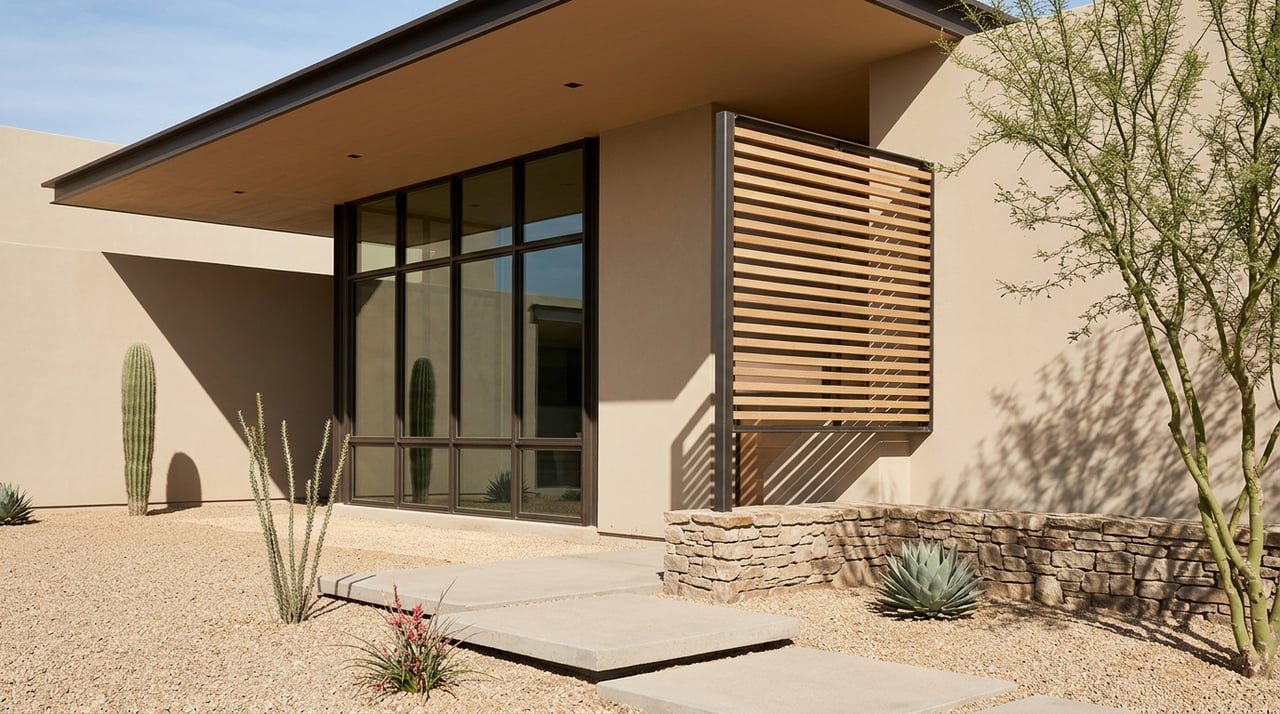
Deep overhangs, porches, trellises, and other shading devices can make a major difference. The Whole Building Design Guide notes that an overhang sized to fully shade a south-facing window in August will also shade it in April. That can be especially useful when a designer wants to reduce summer exposure while still preserving a sense of light and openness.
What to review in window planning
Look beyond the idea of “more glass is better.” Instead, focus on whether the glass is doing the right job in the right place.
Ask about:
- Low solar heat gain glazing for the Tucson climate
- Limited west-facing glass where possible
- Deep overhangs or porches on sun-exposed elevations
- Skylights used sparingly and only where shading is considered
- Room-by-room window placement based on use and orientation
In refined desert architecture, thoughtful glazing can preserve expansive views while still supporting comfort. That balance is part of what distinguishes a home designed for the Sonoran Desert from one that simply happens to be built there.
Roofs and envelopes do the heavy lifting
In a hot, sunny climate, your roof and building envelope matter every day. They help determine how much heat enters the home, how hard the cooling system has to work, and how consistent indoor temperatures feel from morning to night.
ENERGY STAR notes that cool roofs provide the greatest cooling savings in hot sunny climates because they lower roof surface temperature and reduce heat transferred into the home. In Tucson, that makes roof color and roof assembly worth discussing early, especially on homes with large roof planes or limited attic buffering.
The full envelope deserves equal attention. DOE recommends a whole-house systems approach to air sealing because insulation, moisture control, ventilation, and the thermal boundary all interact. That means it is not enough to ask how much insulation is included. You also want to know where the air barrier is located and how penetrations, ducts, and attic conditions are protected from heat gain.
Smart envelope questions for buyers
Before you move forward, consider asking:
- Is the roof specified as a cool roof?
- Where is the thermal boundary drawn?
- How are ducts and penetrations sealed and protected?
- Is the attic sealed or otherwise designed to limit unwanted heat gain?
- How do insulation and air sealing work together in the assembly?
These details may be less visible than finishes or fixtures, but they often have a bigger effect on long-term comfort and operating efficiency (learn what to look for in a real estate development).
Thermal mass can help, but it is not enough alone
Thermal mass often comes up in desert-home conversations, and for good reason. According to BASC, thermal mass can store excess heat during the day and release it later, which may help smooth indoor temperature swings in dry climates.
Still, thermal mass works best as part of a broader strategy. It is not a substitute for shading, insulation, or air sealing. In Tucson, it should be considered in relation to the local day-night temperature swing and paired with other systems that control heat before it builds up indoors.
That is why a polished desert home does not rely on one idea alone. It layers passive design features with smart materials, mechanical planning, and site-specific choices.
Landscape design is part of energy design
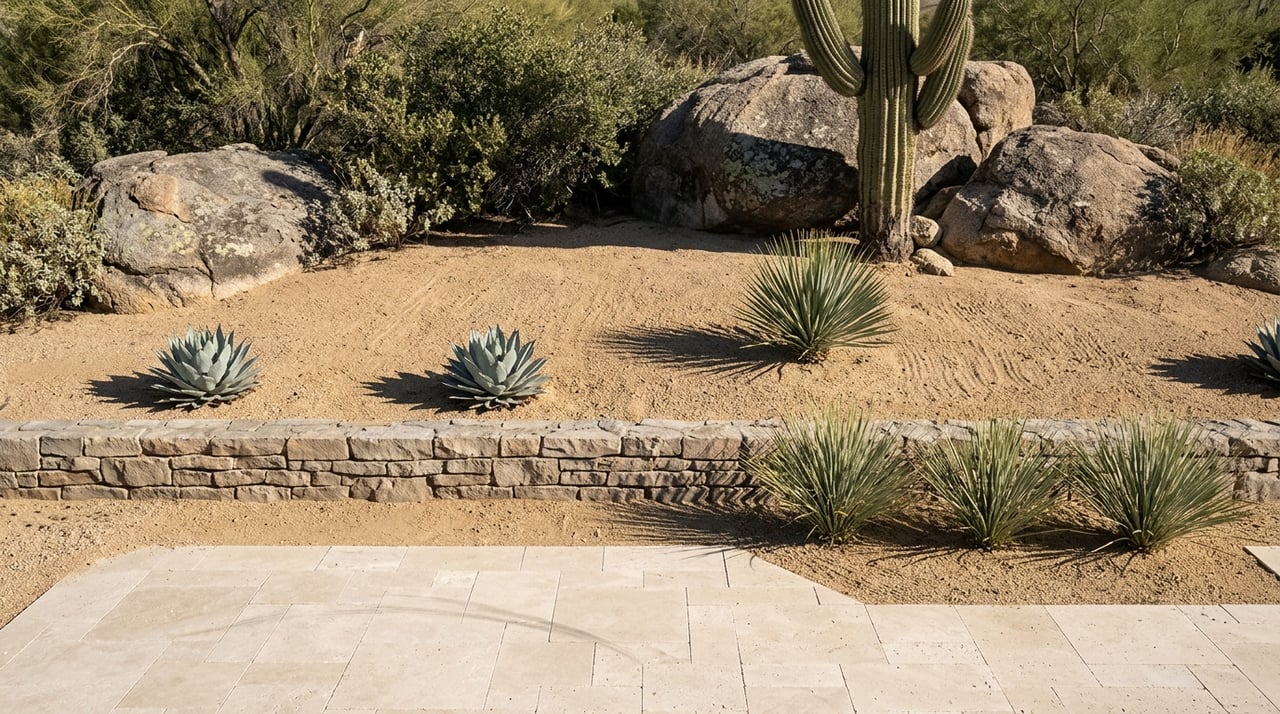
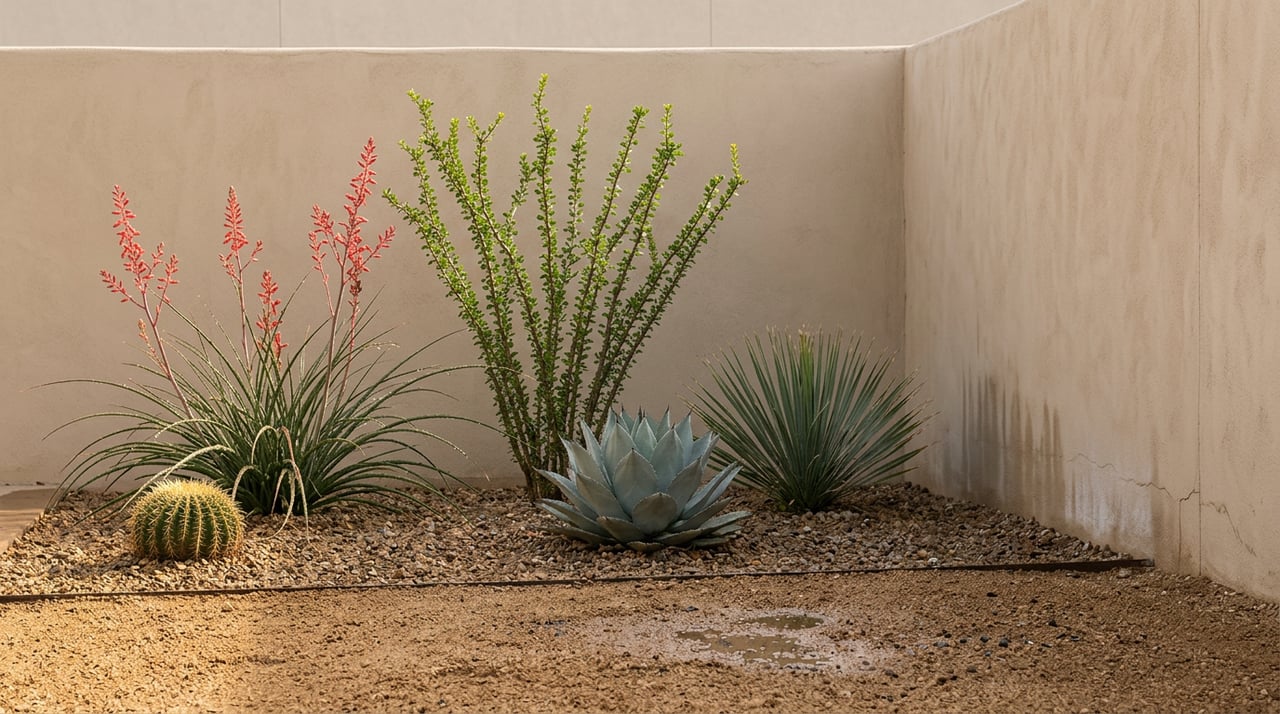
In Tucson, landscape planning is not just about appearance. It affects shade, runoff, irrigation demand, and the comfort of outdoor living areas. A thoughtful landscape can also reduce heat gain on walls, windows, hardscape, and driveways (explore how to curate art and interiors for a Tucson desert home).
The City of Tucson notes that water harvesting can reduce potable irrigation demand. It also states that an average property’s water use is roughly 60% internal and 40% external, which shows how important outdoor planning can be in overall resource use.
DOE also recognizes that landscape shade can reduce solar heat gain. In practice, that means a smart desert landscape can help protect west-facing walls and windows, create more usable outdoor rooms, and support the architecture rather than compete with it.
Desert landscape priorities to discuss
As you evaluate a homesite or design package, ask:
- How will runoff be captured or slowed on site?
- Which planted or built features will shade west-facing areas?
- Are native or low-water-use plant palettes being used?
- How will outdoor rooms stay comfortable in warm months?
- Does the landscape design fit the Sonoran Desert setting?
The best Tucson landscapes feel natural to the site. They use shade, texture, and water-wise planning to create beauty with restraint.
Mechanical systems still matter in high-design homes
Even the most climate-responsive home still depends on strong mechanical planning. Efficient equipment, protected ductwork, and whole-house ventilation all play an important role in how a home feels and performs.
DOE says air-source heat pumps are efficient in warm climates. It also notes that heat pump water heaters tend to perform better in warm spaces, although they can cool the room they occupy. For Tucson buyers, that makes both system selection and equipment location important discussion points.
Ventilation is another key issue. DOE’s Building Science Education site states that whole-house mechanical ventilation is required for good indoor air quality. DOE’s hot-dry guidance also highlights the value of ducts located fully within conditioned space, sealed attics, or similar protected assemblies.
Whole-house fans may also come up in the design process. DOE notes they can be useful in moderate or dry weather, but they are not a substitute for dehumidification or cooling during more humid conditions.
Mechanical questions worth asking
You do not need to become an engineer, but you should know enough to ask:
- Where are the ducts located?
- Is the house designed around a whole-house ventilation strategy?
- Where will a heat-pump water heater be placed?
- Is a whole-house fan included in the plan?
- How are heat gain and equipment efficiency being addressed together?
These questions can help you understand whether a home has been designed as a coordinated system instead of a collection of separate parts.
Outdoor lighting is part of desert stewardship
In the Tucson area, exterior lighting is more than a design accent. It is part of local dark-sky stewardship and part of how a home belongs to the landscape.
Tucson and Pima County regulate outdoor lighting to preserve access to the dark night sky. Their code requires shielded or full-cutoff lighting in many situations. For buyers, that means exterior lighting should be discussed early, not added at the end.
A well-designed lighting plan can still support security, arrival, and evening ambiance (discover more about dark sky outdoor lighting for Tucson homes). The goal is to light paths, entries, and outdoor living areas without spilling unnecessary light into the surrounding desert or diminishing nighttime views.
What this looks like at Saguaro Ranch
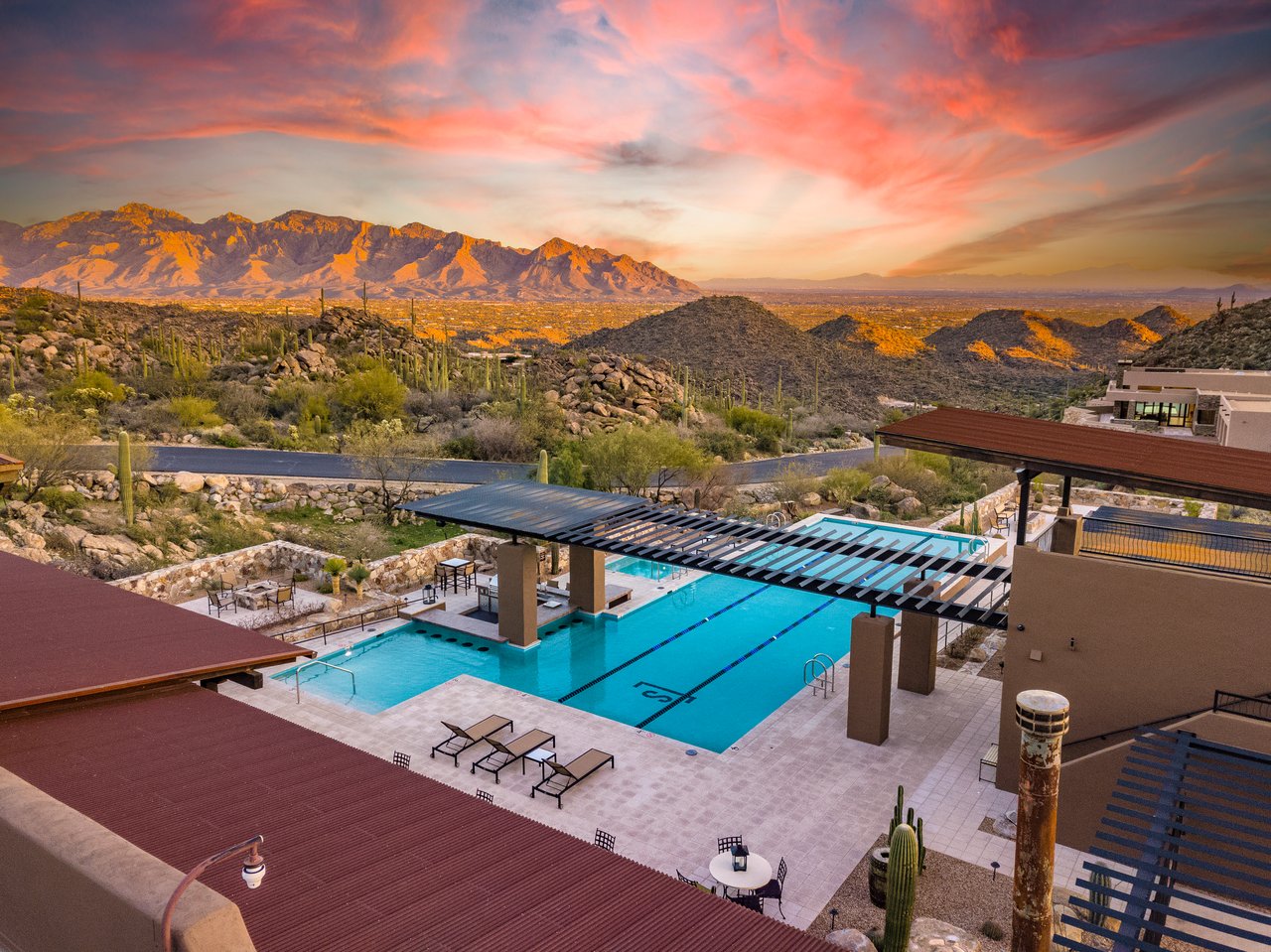
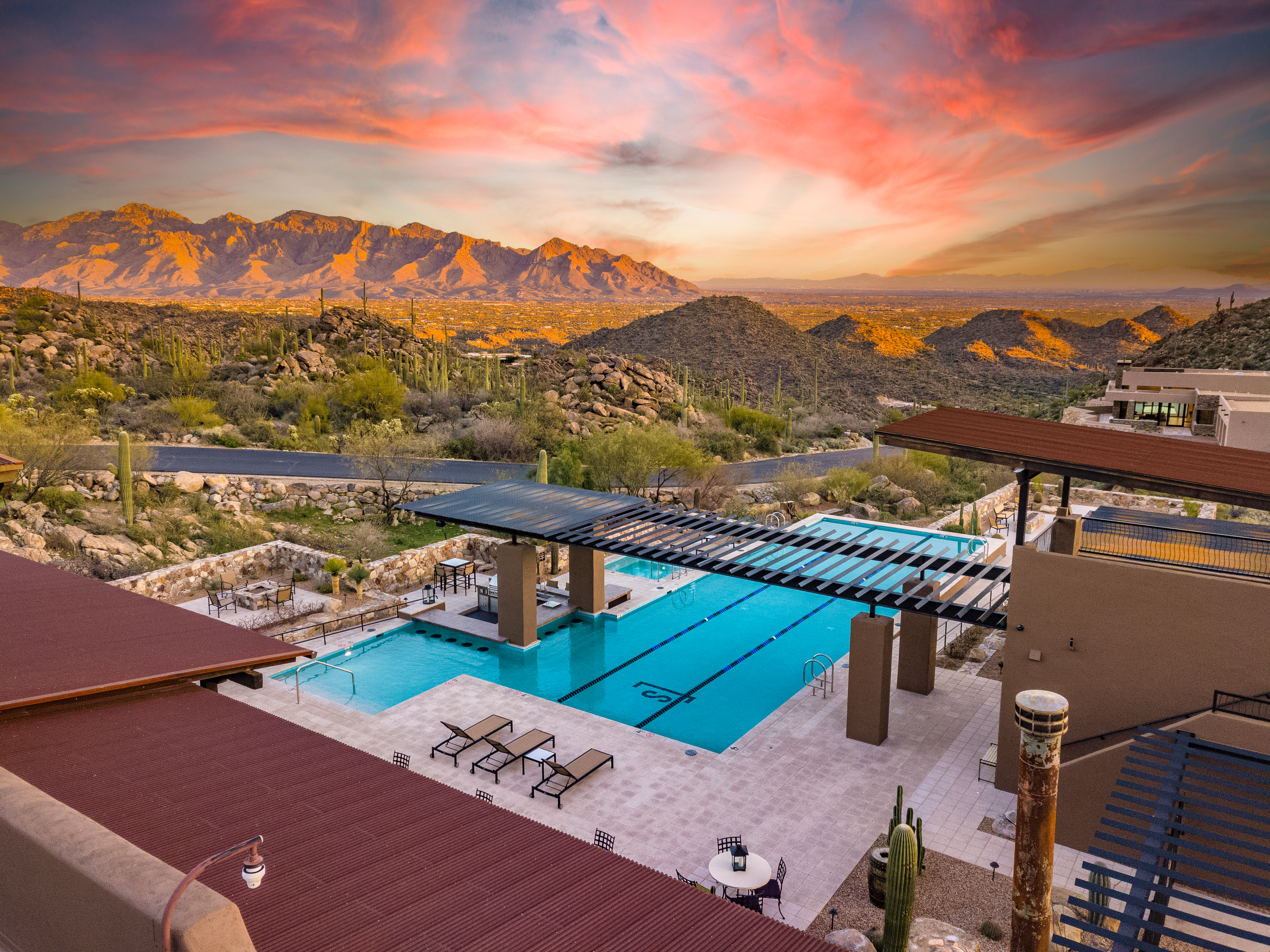
At Saguaro Ranch, energy-conscious desert design aligns naturally with the broader vision of preservation-first living. The community’s materials describe roughly 80% of the land as preserved, along with dark-sky-friendly design standards, low-profile architecture, natural materials, expansive glass walls, and a design and build path that includes Robinette Architects and local builders (understand the building guidelines at Saguaro Ranch).
That matters because it shows how climate response can be integrated into a cohesive luxury experience. Deep overhangs, site-sensitive massing, dark-sky awareness, and a strong relationship to the Sonoran Desert are not treated as technical add-ons. They are part of the architecture, the atmosphere, and the long-term value of the place.
For buyers seeking a refined desert home north of Tucson, this kind of curated approach can simplify the path forward (read our guide to designing your dream home from the ground up). It helps connect homesite selection, architectural planning, and builder coordination in a way that supports both design quality and environmental fit.
If you are exploring what thoughtful desert living could look like in the Tucson area, contact us today to schedule a private visit with Saguaro Ranch and explore a curated path grounded in preservation, architecture, and place.
FAQs
What makes Tucson homes different from homes in milder climates?
- Tucson homes are shaped by a hot-dry climate with intense summer heat, limited rainfall, and strong sun exposure, so shade, solar control, water-wise landscaping, and cooling efficiency usually play a larger role in design.
Why is west-facing glass a concern in Tucson desert homes?
- West-facing glass is harder to shade and is more likely to add glare and unwanted summer heat, which is why buyers should ask how those windows and rooms are protected.
Do cool roofs help in Tucson’s climate?
- Yes. ENERGY STAR says cool roofs provide the greatest cooling savings in hot sunny climates because they reduce roof surface temperature and limit heat transfer into the home.
How does landscaping affect energy use in Tucson homes?
- Landscape design can reduce solar heat gain by shading walls, windows, and outdoor spaces, and Tucson also notes that water harvesting can help reduce potable irrigation demand.
What should buyers ask about HVAC in a Tucson luxury home?
- Buyers should ask where ducts are located, whether the home has a whole-house mechanical ventilation strategy, how heat gain is being managed, and where systems like heat-pump water heaters will be installed.
Why does dark-sky lighting matter for Tucson-area properties?
- Tucson and Pima County regulate outdoor lighting to protect the night sky, so shielded lighting and careful fixture placement help support compliance, nighttime views, and a more thoughtful desert setting.
Related Blog Posts
- A Guide to Sonoran Desert Architecture in Tucson
- Custom Architecture Without Compromise: Designing a Home That Belongs
- Designing Your Dream Home From the Ground Up
- How to Evaluate a Luxury Homesite View in Tucson
- Curating Art and Interiors for a Tucson Desert Home
- Dark Sky Outdoor Lighting for Tucson Homes
- Building Guidelines at Saguaro Ranch