A general home inspection in Tucson takes two to three hours. At the Tortolita foothills price tier, that is roughly the same amount of time a serious buyer should spend just deciding which specialists to hire. The inspection period is not a checklist to complete. It is a scoping exercise, and the two documents that should drive it are the ones most buyers glance at and file away: the seller's disclosure and the five-year insurance claims history.
The thesis is simple. A tile roof that looks intact, a stucco elevation that reads clean from the driveway, and a pool that runs quietly can all still be hiding five-figure repairs at this elevation and this climate. The Arizona contract gives you a narrow window to find them, and the general inspection alone will not.
The Clock That Starts The Moment You Sign
The Arizona Association of REALTORS® Residential Resale Real Estate Purchase Contract governs almost every luxury resale in the Tortolita corridor, and its timeline is unforgiving.
- Day 0 through 3. The seller is obligated to deliver a completed AAR SPDS form to the buyer within three days after contract acceptance. Read it the day it arrives.
- Day 0 through 5. The seller must also deliver a written five-year insurance claims history, or a claims history for the length of ownership if less than five years, from an insurance support organization such as the Comprehensive Loss Underwriting Exchange, within five days after contract acceptance.
- Day 0 through 10. During the inspection period, which is, by default, 10 days under the Residential Real Estate Purchase Contract, the buyer can generally conduct whatever non-invasive inspections and investigations he or she wishes.
- Day 0 through 5 after HOA docs. Under the Arizona purchase contract, the buyer will receive the HOA documents after contract acceptance and has five days from receipt to review and, if necessary, disapprove of the transaction.
- End of inspection period. The Buyer's Inspection Notice and Seller's Response is delivered, listing items the buyer will not accept as-is.
The mechanic worth understanding: the buyer has the inspection period or five days after receipt of the SPDS, whichever is later, in which to provide notice of items disapproved. If the seller drags the SPDS to day nine, your effective window stretches. It also means the SPDS is not background reading. It is targeting data for the inspector.
What A "Serviceable" Tile Roof Actually Means
The dominant roof profile on Tortolita foothills estates is clay or concrete tile over a felt or synthetic underlayment. Homes built in the late 1990s and early 2000s are now aging into their first or second underlayment cycle, and this is where the general inspection fails most reliably.
In Tucson's climate, tile underlayment may last 15 to 30 years, while the tiles can keep looking fine much longer. An inspector standing on the ground cannot see that the waterproof layer is brittle, torn, or at the end of its life, so the report may still call the roof in good condition. Water then travels under tile along the slope before it finally shows up as a ceiling stain, often years after the transaction closes.
Two other Tortolita-specific failure modes rarely make it into a general report. Poor design or settling can leave low spots where water sits for days after a storm, and on a quick visit, especially if the roof is dry, an inspector might never see the ponding area that slowly breaks down coatings and roofing layers. Intense UV and heat in Tucson can cause foam and coating systems to crack, blister, or turn chalky over time, and early damage may be subtle and only visible up close. Foam roofs are common on the flat parapet sections of contemporary desert-modern homes in this corridor. They photograph beautifully. They also require close inspection every few years to catch coating fatigue before monsoon volume finds it.
The practical read: on any Tortolita home with a tile roof over fifteen years old or any visible foam patching, the general inspector's summary is a starting point, not an answer.
The Failure Points A General Inspector Cannot Reach
The Arizona inspection period allows the buyer to layer specialty inspections on top of the general. At the Tortolita price point, five overlays consistently earn their fee.
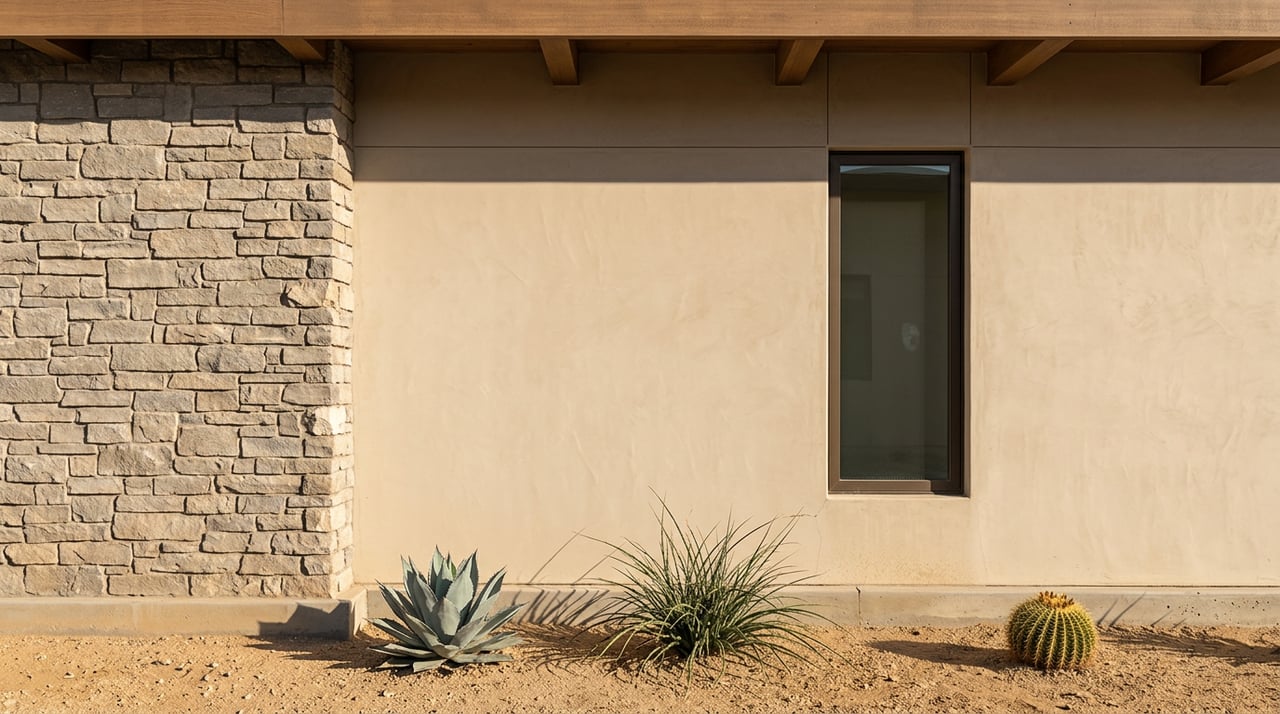
- Stucco and EIFS moisture at transitions. Improper grade contact or window and roof transitions can hide water intrusion, and poor details at roof, window, or grade transitions can allow hidden moisture behind an otherwise clean elevation. Ask whether the inspector uses a moisture meter on window heads and roof-to-wall junctions, not just interior drywall.
- Roof underlayment age, not tile condition. A licensed roofer on the deck, not a generalist with binoculars. Hairline cracks from thermal stress can begin to allow water penetration into underlayment during heavy rains — damage not visible from ground or causing obvious interior leaking yet but compromising waterproofing.
- Packrat activity in mechanical equipment. Packrats are extremely common in Arizona, especially in desert neighborhoods, rural homes, and new subdivisions built on former desert land, and they thrive in Phoenix, Tucson, and across the Sonoran Desert wherever there is cover, food, and hiding places. They often build nests under sheds, AC units, and in car engines, and the damage to wiring and refrigerant lines is often invisible without pulling covers.
- Pool and spa systems as their own transaction. Foothills homes on estate lots frequently carry a pool, an in-ground spa, and a separate water feature, each with its own pump, heater, and bonded electrical circuit. If suggested by the Tucson Home Inspection a Tucson Structural Inspection or Tucson Pool Inspection may be required, and at this tier the pool inspection should not be an add-on to the general. It should be a standalone visit.
- Septic and well on outer parcels. Larger Tortolita and Marana estate lots outside municipal service can be on private septic and, occasionally, private well. Should the property have a septic system a Tucson Septic Inspection will be required. Confirm which utility line reaches the property before you sign.
Reading The SPDS And CLUE Report As Targeting Documents
Most buyers treat the SPDS as background noise. The Saguaro Ranch buyer should treat it as an inspection brief.
If a prior claim has been made, buyers may want their home inspector or a specialist to take a closer look at those specific areas, and the disclosure and claims report should go to the inspector before the appointment so they can evaluate flagged items more thoroughly. A single water claim on the CLUE report, filed six years ago, redirects the entire scope. It tells you where to spend the specialty budget.
The disclosure form itself is more granular than most buyers realize. It asks whether the seller is aware of the type of water pipes, such as galvanized, copper, PVC, CPVC, PEX or polybutylene, and whether the seller is aware of any past or present problems relating to the swimming pool, spa, hot tub, sauna or water feature. Blank answers on those lines are not neutral. They are information about how carefully the seller completed the form.
One legal note worth internalizing: some buyers mistakenly believe that purchasing a property as-is means the seller has no disclosure obligations, however the seller's legal duty to disclose known material defects exists regardless of whether the property is sold as-is. As-is limits repair negotiation. It does not extinguish disclosure.
Building The Specialty Bench
A working scope for a Tortolita foothills luxury inspection tends to look like this.
| System | Specialist | What they are actually looking for |
|---|---|---|
| Tile or foam roof | Licensed roofing contractor on the deck | Underlayment age, flashing at stucco transitions, ponding, coating blisters |
| Stucco elevations | Stucco specialist with moisture meter | Hidden moisture at window heads, roof-to-wall junctions, grade contact |
| HVAC | Dedicated HVAC contractor | Age, capacity for the square footage, refrigerant condition, packrat damage at condensers |
| Pool, spa, water feature | Standalone pool inspection | Pump and heater age, bonding, lighting, plaster condition, tile line scaling |
| Sewer or septic | Sewer scope, or licensed septic pumper | Root intrusion, offsets, tank condition, leach field age |
| Termite and WDO | Licensed WDO inspector | Active infestation, prior treatment history, conducive conditions |
| Pest and rodent | Local pest control | Active packrat middens near equipment, scorpion harborage |
Start with a general home inspection and a WDO/termite inspection, then add sewer scope, HVAC, roof, and other specialty inspections based on the home's age, condition, and features. On homes above roughly the $1.5 million mark in this corridor, most of that list becomes standard rather than optional.
The BINSR Is A Negotiation, Not A Form
At the close of the inspection period, the buyer submits the Buyer's Inspection Notice and Seller's Response listing items requested for repair or credit. In Arizona, the seller can offer the buyer a dollar credit instead of completing the repair before closing, and this credit is applied toward the buyer's closing costs — it is not issued as a check or cash back at closing. For a buyer planning to bring their own contractors post-close, credit is often the cleaner outcome. For a buyer who wants a turnkey handoff, insist on completion with receipts and a re-inspection.
FAQ
Does a new construction home need this same scope? Yes. Buying a newly constructed home is exciting, but brand new does not always mean problem free, and many issues in new construction homes do not become noticeable until several months after move-in. Punch-list inspections at the end of the builder warranty year are as important as the pre-close inspection.
Can the inspection period be extended if the SPDS arrives late? Effectively yes. The buyer has the inspection period or five days after receipt of the SPDS, whichever is later, in which to provide notice of items disapproved.
Is a pre-monsoon closing riskier than a post-monsoon one? It changes what your specialists are looking for. Post-monsoon inspections find damage the season already caused. Pre-monsoon inspections predict where the season will find weakness. Both are useful. Neither is optional at this tier.
The inspection period is where a Tortolita foothills purchase is either de-risked or quietly compromised. If you are preparing to write an offer on a home in this corridor, or evaluating a Moonlight Canyon homesite where the inspection conversation shifts entirely toward land, Saguaro Ranch can walk you through the specialists worth hiring before the clock starts. Schedule a Private Visit to begin that conversation on the land.