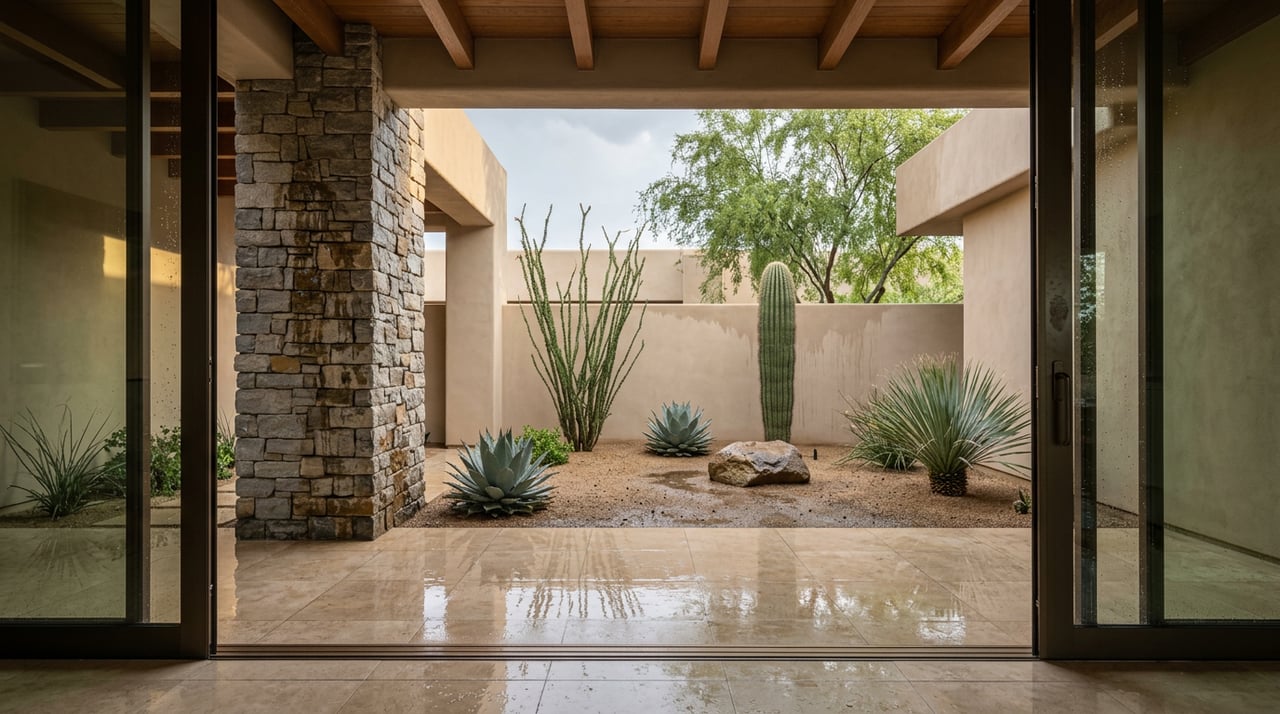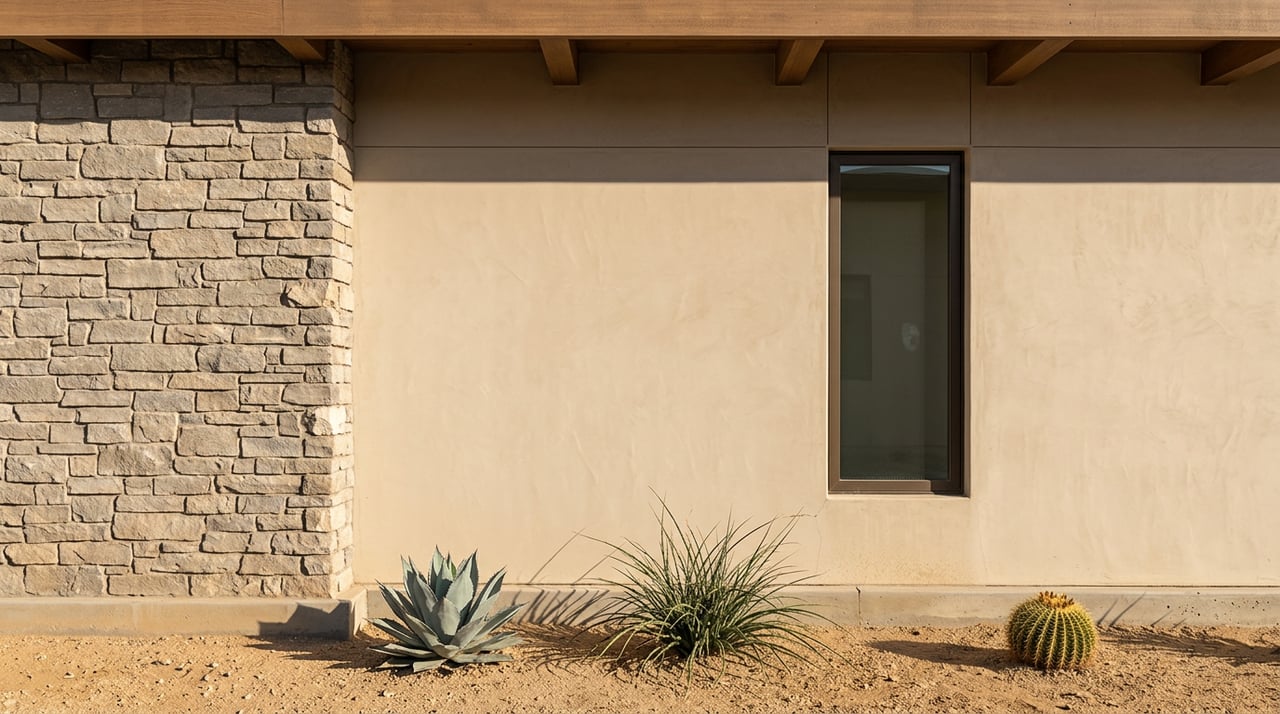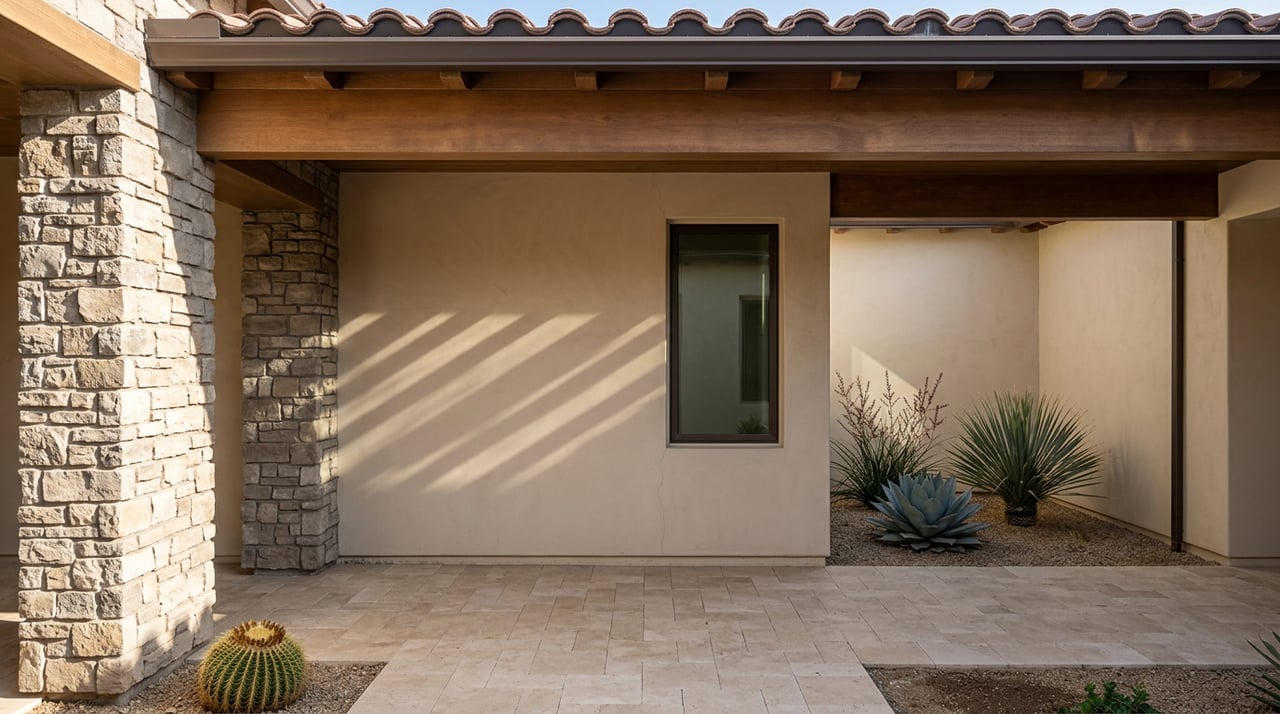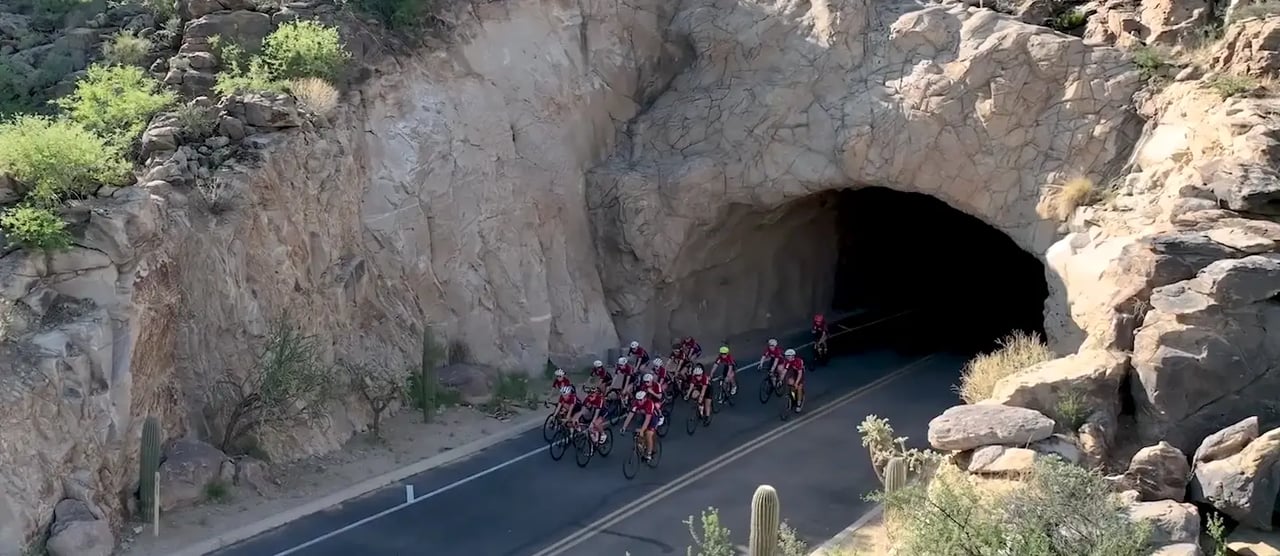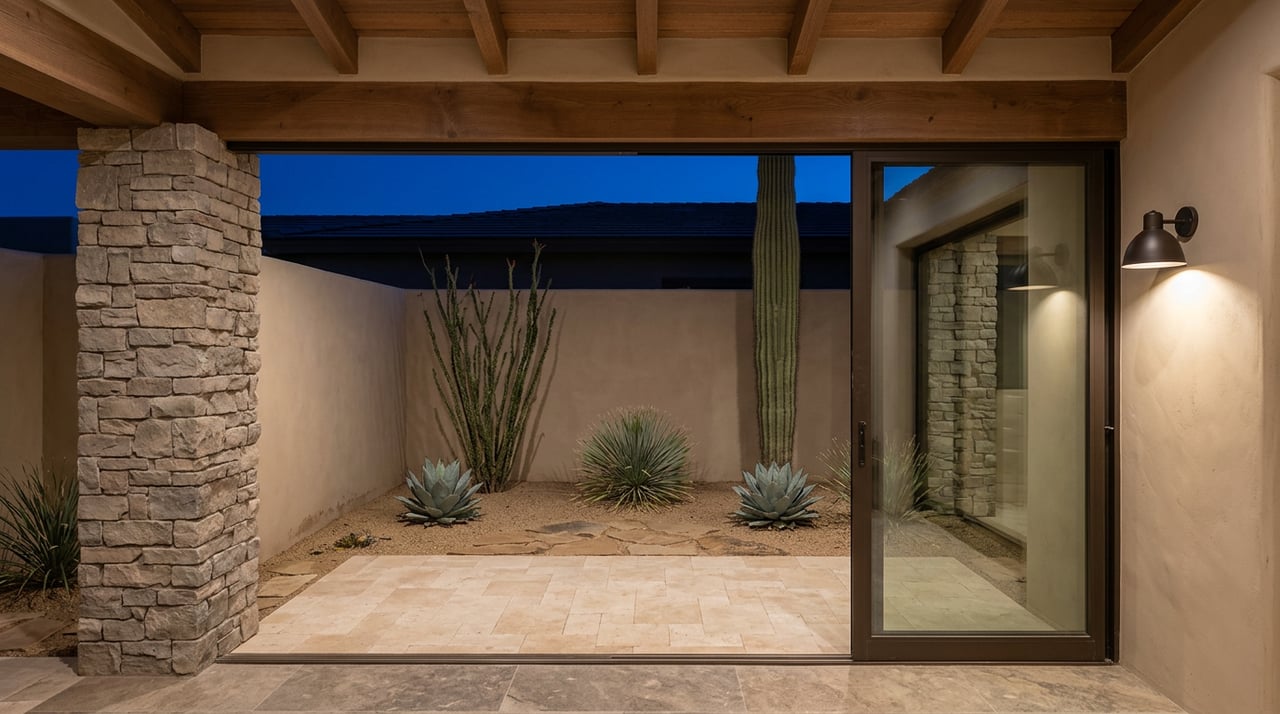
By late July, the Tortolita foothills operate on a different clock. The heat pins the day inside, and life reorganizes around the hours after the sun drops behind the Tucson Mountains. What sounds like a limitation is closer to a privilege. From June through September, the galactic core of the Milky Way rises high above the southern horizon, and the same Pima County outdoor lighting code that keeps observatories operational lets residents see it from their own patios.
This calendar is not a tourist itinerary. It is the shape of a summer already in progress for households along Moore Road, Dove Mountain Boulevard, and the private lanes tucked into the Tortolitas. The premise: darkness is the neighborhood's most underused amenity, and the local venues that program around it are close, quiet, and mostly free.
The season's headline is overhead
Southern Arizona receives more than 350 clear nights a year, and the summer window is when the sky delivers its most photographed subject. The bright galactic core, the dense center of the Milky Way, is only fully visible from the northern hemisphere between roughly June and September. It sits low and south, exactly where the Tortolita ridgeline drops away from most homesites on the north-facing slope.
Two conditions decide whether you actually see it. The first is the moon phase. New-moon weeks flatten out the ambient sky and let faint structure emerge. The second is the ordinance. Pima County's code requires full-cutoff, warm-color fixtures and caps total lumens per acre, which is why an eastward glance from a foothills patio does not dissolve into the orange wash you would see from a comparable elevation outside Phoenix. DarkSky International is headquartered in Tucson for the same reason.
The practical read: a patio chair, a red-filtered flashlight, and a moonless Tuesday will out-deliver most paid experiences within a two-hour drive. That is the argument this whole calendar is built around.
A working July and August
The northwest side runs a quiet, dispersed program of after-dark events through the hottest weeks. None of these require a highway drive, and most are free.
| Date | Event | Venue |
|---|---|---|
| Thu 7/9 | Tutt & Co., Oro Valley Concert Series | The Gaslight Music Hall |
| Fri/Sat evenings, summer | Live music, Garden Bistro service | Tohono Chul |
| Sat 7/18, 7:30 PM | Movie on the Lawn: How to Train Your Dragon (2025) | Oro Valley Community & Recreation Center |
| Sun 7/26, 1:30 PM | Starry Cactus Paint and Sip | OV Pizza and Pints |
| Fri 8/14, 6:00 PM | Uncommon Crossroads, Oro Valley Concert Series | The Hoppy Vine, Oro Valley |
| Sat 8/15, 6:30 PM | Movies in Marana: The Emperor's New Groove | Continental Ranch Community Park |
The Oro Valley Concert Series is free with seating reservations recommended, and the Gaslight room is small enough that a table booking effectively locks the evening. Tohono Chul's Friday and Saturday summer nights lean on the shaded mature-tree canopy of the gardens, which measurably cools the walk-through even in August. On the Marana side, Continental Ranch Community Park's outdoor movie nights run late enough that families are typically leaving right as the sky reaches full astronomical dark.
None of this is programming for out-of-towners. The reservation windows fill from local email lists, and the crowds skew to residents who have already learned that "summer in Tucson" does not mean staying indoors from June to October.
The preserve's second life
The Tortolita Preserve, 2,400 acres of gently sloping desert established in 2009 and reached from the trailhead at Moore and Wild Burro, is a summer-morning venue by default. A newer parking area finished in 2023 holds twenty vehicles and four horse trailers, and the loop is nine miles of mostly flat singletrack. What most residents miss is that the preserve doubles as a nocturnal ecosystem worth knowing by name.
The Tortolita Alliance tracks the Queen of the Night, Peniocereus greggii, a cactus whose stems look like dead sticks year-round and whose flowers open for a single night in late May or early June. In 2026, one of the preserve's south-side Queens went off before observers could catch it in bloom, though the spent flower and forming fruit were photographed on May 17. If you live within ten minutes of the trailhead, this is the kind of event you can actually plan around next spring. It is not on any tourism itinerary, because catching it requires knowing where the plants are and being willing to check nightly.
The same trail network hosts different fauna after sundown than during the morning saguaro-cardinal shift. Elf owls, lesser long-nosed bats moving between agave blooms, and coyote choruses are all more legible when the ambient light does not compete. This is one place where the "so what" of Pima County's ordinance stops being abstract: bats avoid lit corridors, and unlit corridors are precisely what the preserve and the surrounding developments preserve.
What the ordinance actually buys you
Homeowners in curated communities absorb design guidelines as a cost. The dark-sky requirements are the exception, because they compound in a way most restrictions do not.
The Pima County code enforces three rules that matter at the property line:
- Fixtures must be shielded and downward-directed, capping upward spill.
- Lumen output is capped per acre, so density of light cannot creep up over time.
- Blue-rich, high-Kelvin sources are restricted in favor of warmer, amber tones.
Applied across a whole region for more than fifty years, these three rules produce a night sky quality that scales with property size in a way most amenities do not. A one-acre lot in an unregulated jurisdiction is functionally the same as a five-acre lot for stargazing purposes if the neighbors are running unshielded yard lights. Inside the Tortolita foothills, the same acreage delivers something closer to observatory conditions. Saguaro National Park, roughly forty-five minutes south, was certified an Urban Night Sky Place by DarkSky International and the National Park Service on the strength of the same regional ordinance framework.
For residents, the design guideline is not a chore. It is why the amenity exists at all.
When you want a bigger sky
Even the best foothills patio has a horizon somewhere. Three regional venues extend the season for residents who want more than a lounger and binoculars.
The Mt. Lemmon SkyCenter, at 9,157 feet in the Santa Catalinas, runs the SkyNights StargazingProgram through the summer. The elevation strips roughly a third of the atmosphere out of your line of sight and drops the ambient temperature into the sixties on the same evening a foothills patio reads ninety-five. Reservations tighten in July because the same weather that makes lower elevations difficult drives everyone up the Catalina Highway.
Catalina State Park hosts periodic star parties staffed by volunteer astronomers from the Tucson Amateur Astronomy Association, founded in 1954. Meet at the trailhead lot at the end of the park road, bring a jacket and a red flashlight, and expect telescope time on whatever is highest that night. TAAA also arranges private and resort events on request, which is useful when a household is hosting visitors and wants to bring the astronomer to the property rather than the other way around.
Flandrau Science Center & Planetarium at the University of Arizona runs its Science at Sunset evenings with a planetarium lecture, free outdoor telescope viewing from eight to ten, and a live star talk keyed to that night's actual Tucson sky. This is the shortest drive of the three and the least weather-dependent, since the dome runs regardless.
A single practical calendar
If you cross-reference the moon and the local program, a working July looks like this: astronomy nights on the darker weeks, live music at Tohono Chul or the Gaslight on the brighter weeks, and one preserve morning per week to keep the trail muscle memory intact before the next monsoon cell rolls off the Tortolitas. August compresses the same rhythm as the daytime highs peak. By September, the galactic core starts to set earlier and the calendar shifts back to open-window dinners.
The households who get the most from summer here are the ones who treat darkness as programming rather than an inconvenience. The amenity is already built. It runs from about nine PM to five AM, six or seven nights a week, and it costs nothing beyond the discipline of turning off your own porch light before you look up.
Schedule a private visit with Saguaro Ranch to see how a homesite in the Tortolita foothills sits inside this calendar, from the arrival at the tunnel to the last hour of dark sky over your own patio.