Considering building in Tucson, but unsure whether a semi-custom plan or a fully custom home is the best fit for you? You are not alone. The right path depends on your priorities for timeline, design control, budget predictability, and how you want to navigate approvals. In this guide, you will learn how each approach works in Pima County, what to expect from local permitting, and the on-the-ground factors that shape cost and schedule. Let’s dive in.
Tucson builds paths at a glance
Semi-custom homes utilize a catalog of pre-designed plans with defined options. You choose a plan, select finish packages and limited modifications, and move forward on a known path. This can offer a faster building process.
Fully custom homes start with a blank page and an architect. You tailor layout, orientation, materials, and systems to your site and lifestyle. You gain maximum control, and you take on more decisions, coordination, and time.
Both paths can deliver excellent results in Tucson. The difference is how much you want to customize, how quickly you want to move in, and how tightly you want to control budget risk.
Timeline: speed to move-in
Semi-custom typically moves faster because an architect/builder’s base plans, structural details, and option menus are already developed. If you are building in a community where plans are pre-approved against design standards, you can bypass lengthy design reviews and head to permits sooner.
Custom usually takes longer. You will work through schematic design, detailed documentation, engineering, and multiple review rounds. Site-specific conditions can add iterations and extend the calendar.
Exact duration varies by builder capacity, permit office workload, and the conditions of your lot. Ask local builders for recent examples of similar projects and current permit turnaround with the Town of Marana.
Design control and uniqueness
Semi-custom gives you moderate control. You can select from floor plans and elevations, choose finish packages, and occasionally make modest plan tweaks. Most customization happens at the level of finishes and minor layout choices.
Custom offers full control. You can optimize orientation for views, tune the plan to topography, and select unique materials and systems. That flexibility comes with more design time and more coordination among your team.
Consider how many decisions you want to make, and where uniqueness matters most. Often, the best results come from choosing a path that matches your appetite for decision-making.
Budget and cost predictability
Semi-custom usually has greater predictability. Builders publish base pricing, allowances, and upgrade lists, providing a clearer view of total cost. The plan has been built before, which reduces the likelihood of surprises.
Custom is less predictable. Bespoke details, one-off materials, and unknown site conditions increase the chance of change orders. A solid budget for custom work depends on complete construction documents and a conservative contingency.
Whichever path you choose, request written scopes, allowances, and a clear change-order process. This is one of the easiest ways to protect your budget.
Approvals and permitting in Tucson
Properties inside Saguaro Ranch are permitted by the Town of Marana. They conduct plan checks for building, electrical, mechanical, plumbing, and, in many cases grading and drainage.
Saguaro Ranch is located in a neighborhood with Covenants, Conditions and Restrictions (CC&Rs), expect an architectural review. Communities with pre-approved plans have already aligned those designs with standards for materials, colors, exterior lighting, and low-water landscaping, which can reduce review time.
Plan review timelines can shift with workload and submittal quality. Ask builders and architects for recent, date-stamped examples of permit lead times in your specific office.
Site and climate factors in the Sonoran Desert
Tucson’s soils often include caliche, a concrete-like hardpan that can affect excavation and foundation design. A geotechnical report will help you plan for the right footing strategy.
Desert washes and arroyos shape drainage and setbacks. Many lots require engineered grading and drainage plans. Topography and view corridors can influence orientation, as well as the design of the retaining walls and structural solutions.
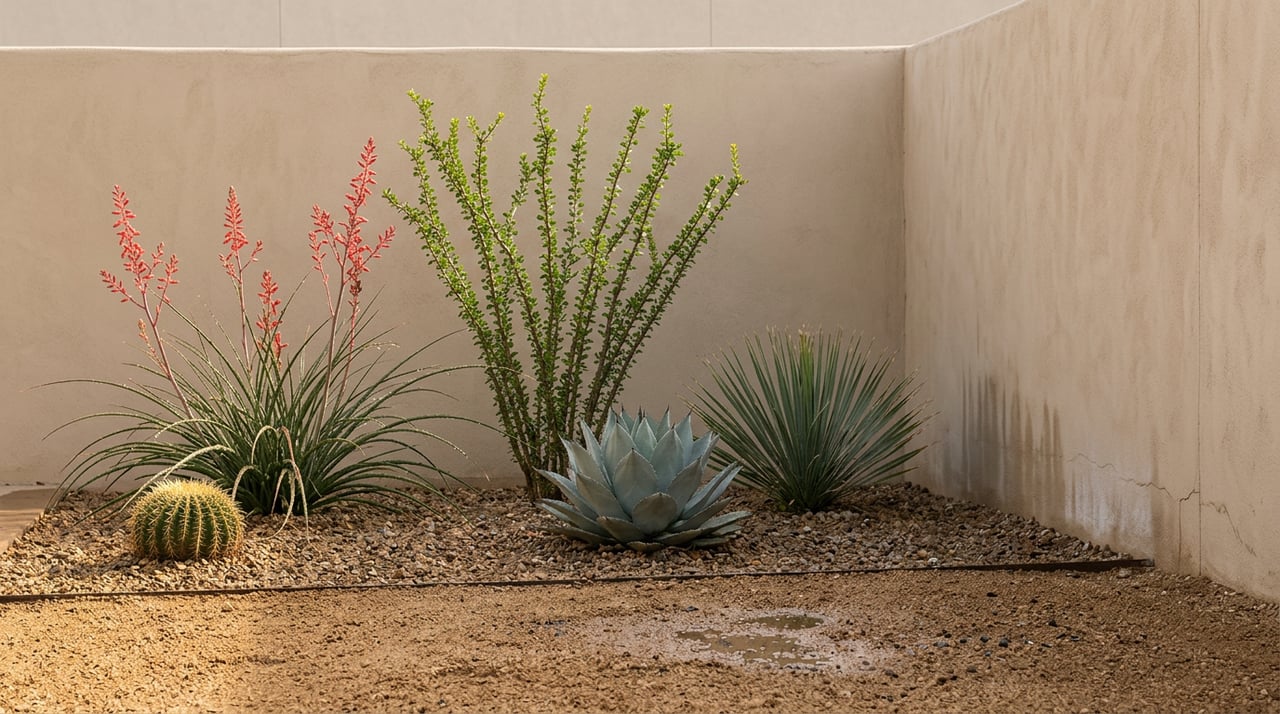
Climate priorities include solar orientation, shading, high-performance glazing, and right-sized HVAC. Local codes reference energy-efficiency standards that affect insulation, windows, and equipment. Xeriscape and water-wise landscape practices are common, and local programs may offer rebates for conservation measures. Confirm any requirements and incentives with the relevant agencies before you finalize the design.
Which path fits you? Decision guide
If speed and predictability are your top priorities, a semi-custom plan is often the better match. You benefit from pre-defined scopes, known option pricing, and a streamlined path through community reviews.
If site optimization, unique architecture, or long-term custom features most important, custom design gives you full freedom. Plan for more time, oversight, and contingency.
There is also a middle ground. A design-build team can streamline a custom process under one contract. Alternatively, you can start with a semi-custom plan and then pursue in-depth modifications. Expect that larger changes will add time and cost.
The Tucson checklists: steps and documents
Semi-custom: typical steps
- Select a community and a pre-approved plan. Review what is included and the upgrade list.
- Sign a builder contract that outlines base price, allowances, and payment milestones.
- Complete finish selections and any lot-specific options.
- The builder adapts the site plan and, if necessary, submits to the community design review.
- The builder submits for city or county permits and coordinates utility applications.
- Construction proceeds through site work, foundation, framing, MEP rough-ins, and finishes.
- Inspections, certificate of occupancy, final punch list, and handover.
Documents to request: base plan set, options list, sample specifications with allowances, a recent build schedule, warranty terms, and proof of licensing and insurance.
Custom: typical steps
- Acquire your lot and retain an architect or designer with a structural engineer.
- Complete schematic design, design development, and full construction documents.
- Order a soils report and topographic survey and integrate them into structural and grading plans.
- Submit to the POA or developer design review if applicable.
- Submit a full permit package to the correct jurisdiction. Some lots require engineered civil and drainage plans.
- Bid to general contractors or negotiate a design-build contract.
- Manage construction with regular site meetings. Expect inspections and possible change orders.
- Certificate of occupancy, punch list, and warranty process.
Documents to request: full construction documents, engineering reports, a cost estimate tied to the drawings, owner-architect and owner-contractor agreements, and a clear change-order policy.
Local due diligence: utilities, licensing, and warranties
Tucson Water provides water, Trico provides electricity, Comcast provides internet access, and all owners are required to install private septic systems. Connection timing can affect your move-in date.
Verify the contractor’s Arizona Registrar of Contractors license and insurance. Ask about warranty terms, punch-list procedures, and response times for post-occupancy issues. Seek references for recent projects in Tucson or Pima County.
Before you sign, clarify who will coordinate utility applications, meter sets, and hookup fees. Confirm whether your contract is fixed price or cost-plus, and exactly what is included or excluded.
How Saguaro Ranch fits both paths
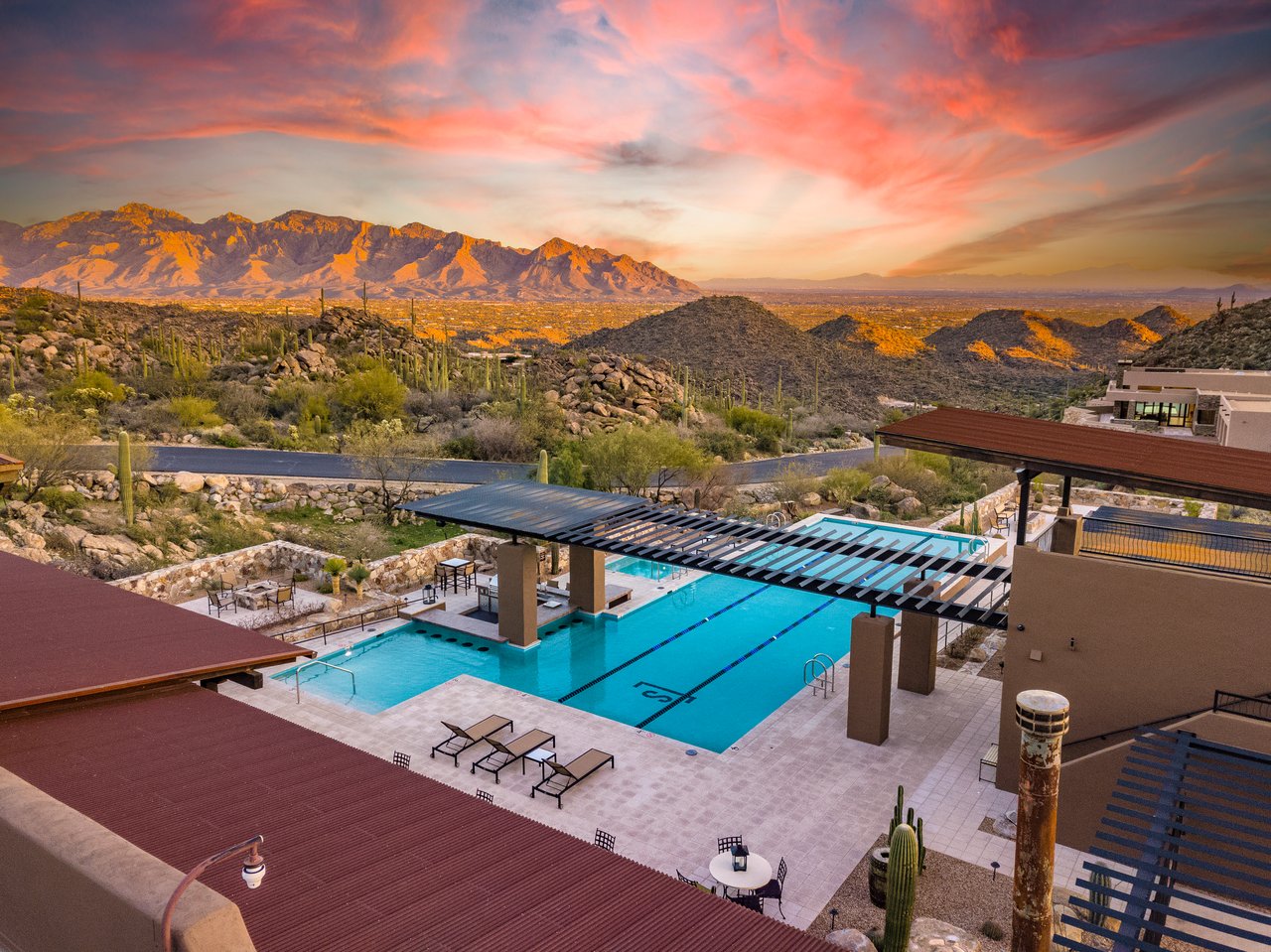
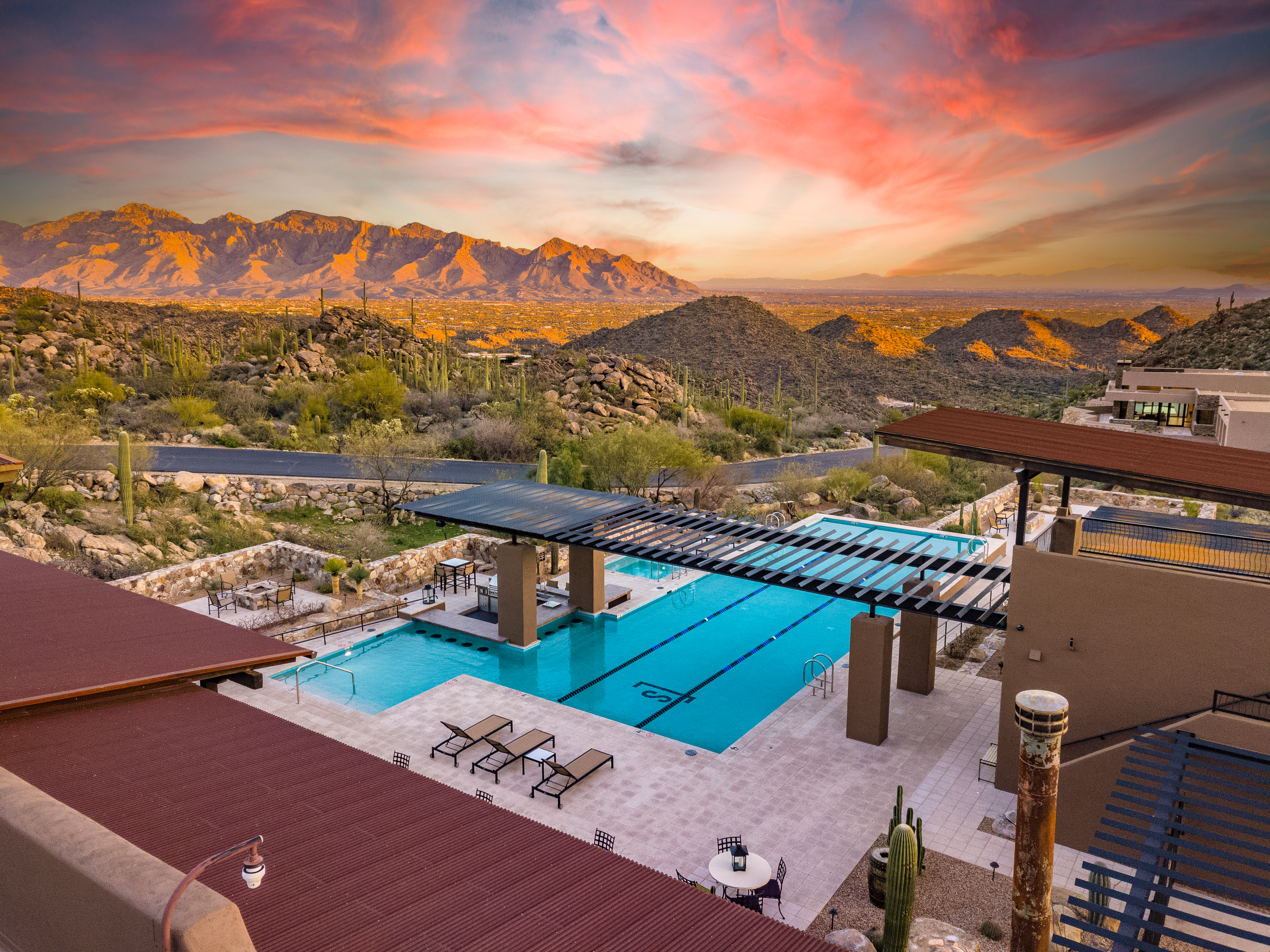
If you want a curated path that balances speed with design quality, consider how a preservation-first community can simplify your decision making process. At Saguaro Ranch, approximately 80 percent of the land remains undisturbed, which protects views, privacy, and the dark sky experience. The result is a rare setting for one- to two-acre Moonlight Canyon homesites and larger estate parcels.
For buyers who value predictability, pre-approved architectural plans and a preferred builder program can expedite the design review and bring clarity to allowances and selections. For those who want more control, build-to-suit opportunities pair curated land with experienced architects and endorsed builders, aligning custom outcomes with community design standards.
Lifestyle is also part of the equation. The private Saguaro Ranch Club offers a range of amenities, including fitness, aquatics, and courts, bringing a resort-like rhythm to daily life. The dramatic tunnel arrival sets the tone for an experience that feels both private and connected.
Next steps: your decision checklist
- Define your top two priorities: speed, design freedom, cost certainty, or site optimization.
- Confirm with the Town of Marana and ask for recent permit timelines from local professionals.
- Obtain a soils report, topographic survey, and utility availability checks as early as possible.
- Request written scopes, allowances, and a change-order process from your builder.
- Decide between fixed-price and cost-plus, and document inclusions and exclusions.
- If in a community, obtain CC&Rs, design guidelines, and design review timelines.
- Ask for references from recent Tucson or Pima County projects with a similar scope.
When you are ready to see how curated land, pre-approved plans, and endorsed builders can streamline your path, schedule time for a site visit and design conversation at Saguaro Ranch.
FAQs
What is the main difference between semi-custom and custom homes in Tucson?
- Semi-custom uses pre-designed plans with limited modifications for faster timelines and clearer pricing, while custom starts from scratch for maximum design control and longer coordination.
How long does permitting usually take in Pima County for new homes?
- Timelines vary with workloads and submittal quality; ask your builder or architect for recent, date-stamped examples in either the City of Tucson or Pima County.
Do I need a soils report for a new home near Tucson’s desert washes?
- Yes, a soils report is recommended because local condition, such as caliche and drainage, can affect foundation design, grading, and overall cost.
How do HOAs and CC&Rs affect my design choices?
- Many communities require architectural review for materials, colors, lighting, and low-water landscaping; pre-approved plans can reduce review time and uncertainty.
What utilities should I verify before building with the Town of Marana?
- Confirm water and sewer providers, and coordinate electric, gas, and telecom; connection fees and timelines can influence your schedule and budget.
Which path offers better budget predictability in Tucson?
- Semi-custom projects typically offer clearer allowances and upgrade pricing, while custom projects benefit from detailed drawings and a healthy contingency to manage unknowns.
Can a semi-custom plan be modified to feel more custom?
- Yes, some builders allow deeper plan changes, but larger modifications can extend design and permit timelines and add cost.
What questions should I ask a Tucson builder before signing?
- Ask about similar recent projects, permit lead times, allowances and change orders, who handles utilities, contract type, inclusions, exclusions, warranties, and response times.