Do you want outdoor lighting that lets you dine on the patio and still see the Milky Way? In Tucson, you can have both. With the right plan, you protect the night sky, respect wildlife, and elevate the look and feel of your home. This guide gives you clear design principles, code-aware tips, and a practical checklist tailored to northern Tucson and the Tortolita foothills. Let’s dive in.
Why dark-sky lighting matters here
Southern Arizona is known for world-class stargazing and a long culture of lighting stewardship. In the foothills and rural lots, there is less ambient glow, so a single property’s lights have a bigger impact on the sky and on neighbors. Light at night also affects wildlife patterns, from bats to small mammals, which are common along foothill corridors. By choosing the right spectrum, shielding, and controls, you can improve comfort and safety while preserving night views.
Know the Tucson and Pima County rules
Local outdoor-lighting ordinances are well established. You can expect requirements for fully shielded fixtures, limits on glare and light trespass, and controls such as timers or motion sensors for certain uses. Numeric limits on lumens, mounting heights, or color temperature can vary by jurisdiction and zoning. Check the exact ordinance for your parcel early in design, including any HOA or special district standards.
Permits and approvals
Ask whether exterior lighting plans are part of your submittals. If your site sits near conserved open space, a wildlife corridor, or an observatory buffer, confirm whether additional restrictions apply. Do not assume city and county rules are identical. A quick conversation with planning staff can save costly revisions later.
Core design principles to guide your plan
- Eliminate uplight. Choose fully shielded, full-cutoff fixtures that emit no light above horizontal.
- Warm the spectrum. Use the warmest practical color temperature to reduce blue light and skyglow.
- Light only what you need. Keep lumens low and targeted to the task instead of broad-area flooding.
- Control the hours and intensity. Use timers, dimming, motion activation, and zoning to keep light off or low when not needed.
Color and spectrum made simple
Aim for a maximum of 2700 K for most exterior applications. In sensitive areas or where wildlife and observatory protection is a priority, consider 2200 K or amber-spectrum LEDs. If you are lighting stone, metal, or wood where color fidelity matters, look for a CRI of 80 or higher while keeping the color temperature low. Warmer light reduces blue content, lowers perceived glare, and helps protect circadian health.
Shielding and distribution
Select fixtures that are fully shielded and specify zero uplight in writing. Where helpful, use BUG ratings and target U0 for uplight. Add louvers, shrouds, and glare shields to keep light on the surface you intend to illuminate. Aim beams below horizontal and position fixtures so they do not shine into view corridors or across property lines.
How bright is bright enough
Design to the task and set a site lumen budget. Use these practical starting ranges:
- Pathway or step lights: 25 to 150 lumens per fixture for low, even illumination.
- Deck, porch, or entry: 200 to 600 lumens depending on scale and ambiance.
- Accent or spot on trees or architecture: 200 to 600 lumens with tight beams and careful aiming.
- Driveway or arrival: use shielded wall or pole fixtures with motion activation instead of continuous high-output floods.
If anything feels too bright during commissioning, dim rather than add shields after the fact. Many designers cap lumens per zone and adjust on site.
Fixture types that work in the Tortolitas
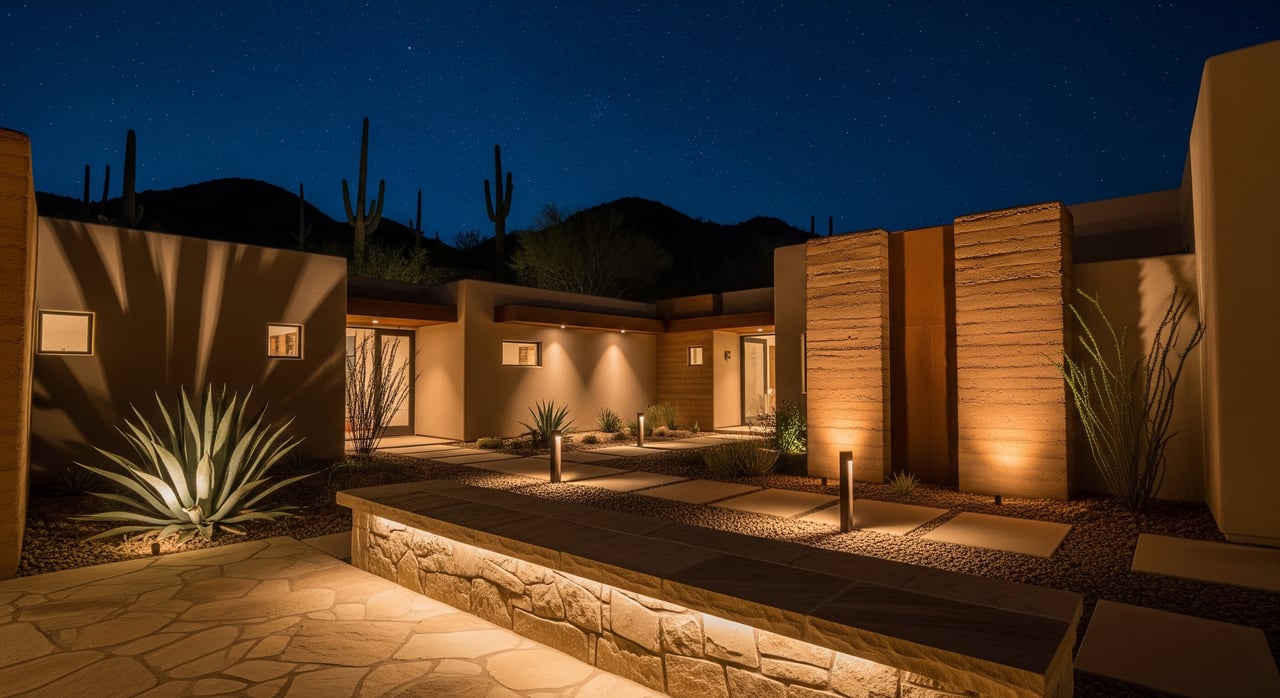
- Preferred: recessed soffit downlights, fully shielded wall sconces, shielded bollards for paths, step or riser lights, and in-grade wells only when recessed, narrow, and carefully aimed.
- Minimize: unshielded floods, high-mounted floods without shields, and decorative fixtures that emit upward light.
- Keep mounting heights low where possible. For occasional tree accents, place fixtures close to the trunk, use narrow beams, and limit hours.
Controls and smart operation
Layer your controls so light is on only where and when you need it:
- Astronomical time clocks for scheduled on and off tied to sunset and sunrise.
- Motion sensors for security or driveway zones so lights stay off until triggered.
- Dimming capability for scene-setting and seasonal adjustments.
- Zoning so entertaining areas can operate at comfortable levels while remote zones remain off.
Choose LED drivers that support dimming and plan for desert durability with proper thermal management.
Plan, install, and commission at night
Review your lighting at night after installation. Confirm aims, check for glare from seated and standing viewpoints, and walk the property line to ensure no trespass. Record dimming levels and timer schedules. Include a maintenance plan for cleaning lenses, replacing drivers or lamps as needed, and updating seasonal schedules.
A designer brief you can send today
Use this checklist to align your team from day one:
- Project goals: maximize night-sky visibility, minimize skyglow, create comfortable outdoor living, and highlight key architecture and landscape.
- Site context: property map, orientation, neighboring land use, adjacent open space, and photos of important night views.
- Activity program: list zones like dining, pool, paths, and entry with desired hours of use for each.
- Constraints: cite applicable city or county ordinance, HOA standards, and any observatory or conservation buffers.
- Technical preferences: fully shielded fixtures, maximum CCT 2700 K or 2200 K/amber in sensitive zones, CRI targets, and dimmable, zoned controls with an astronomical clock.
- Lumen strategy: require a site lumen budget with a schedule showing lumens per fixture and totals per zone, plus a night rendering.
- Commissioning: contractor to aim on-site and correct any glare or trespass.
Selecting fixtures and manufacturers
Look for products with recognized dark-sky approvals and published photometrics. Ask for BUG ratings, spectral data, and clear documentation of CCT and driver specs. For luxury projects, choose architectural lines that achieve full cutoff and warm spectrum without sacrificing design quality. Prioritize serviceable components and corrosion-resistant finishes suited to the desert.
Security without the glare
Good task lighting at entries and paths often reduces the need for high-output floods. Where you want a sense of security, use shielded fixtures with motion activation and narrow distribution aimed at the ground plane. Keep continuous lighting to a minimum. This approach improves visibility and protects your night views.
How Saguaro Ranch honors the night sky
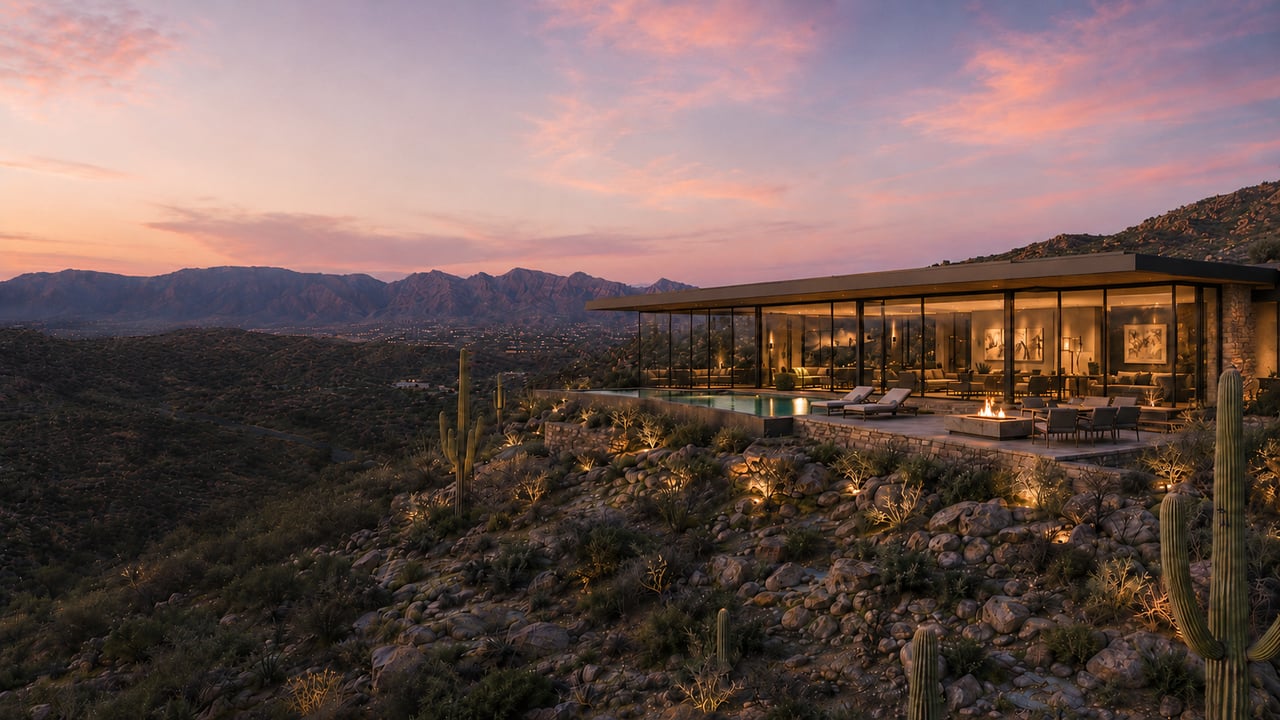
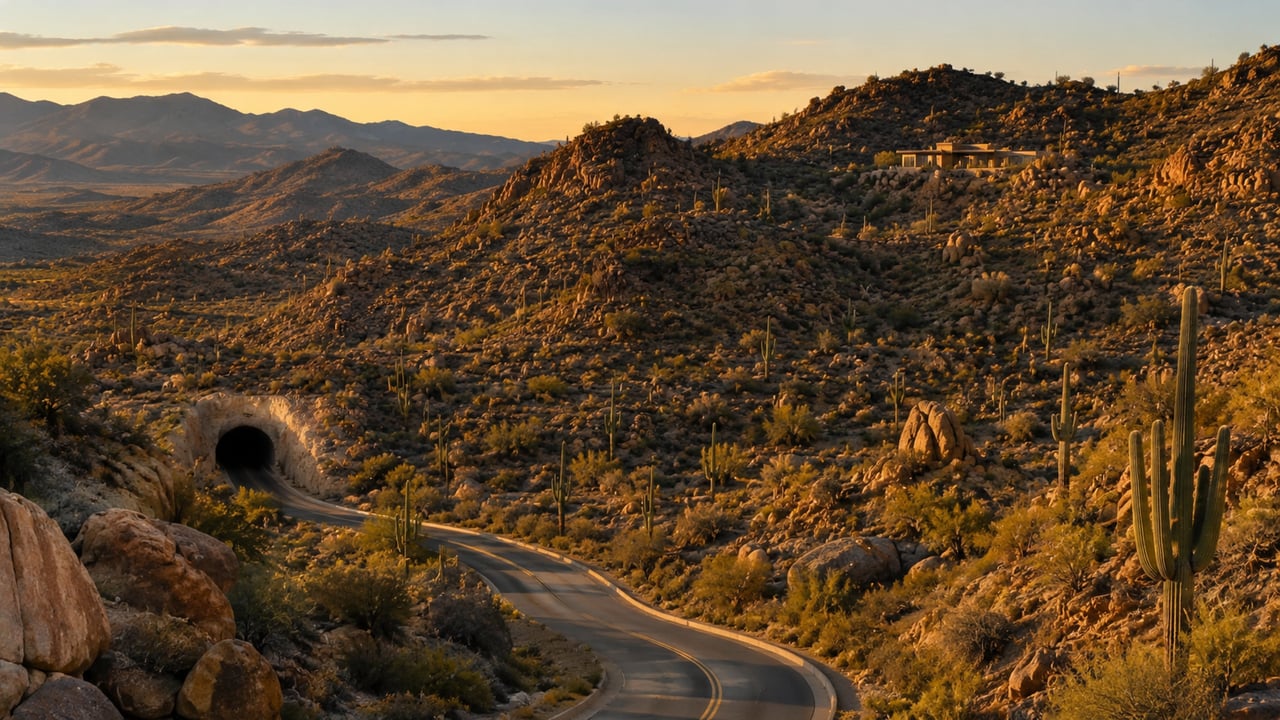
In the Tortolita Mountains, night is part of the experience. A preservation-first land plan behind the private mountain tunnel entry keeps most acreage undisturbed, protecting the dark skies that define life here. If you are planning a home, curated architects and preferred builders can help align your lighting with site context, design goals, and local standards so outdoor living feels effortless and the stars remain the main event.
Ready to explore homesites and design pathways that keep the skies bright with stars? Schedule a Private Visit with Saguaro Ranch.
FAQs
What is dark-sky lighting for Tucson homes?
- It is a design approach that uses warm-spectrum, fully shielded, and low-output fixtures with smart controls to reduce skyglow, glare, and light trespass while supporting outdoor living.
Why is warm color temperature important in the desert?
- Warmer light, typically 2700 K or lower, reduces blue spectral content that drives skyglow and circadian disruption, which helps protect night views and comfort.
How can I light pathways without harming night views?
- Use many low-lumen, shielded fixtures close to the ground, keep illumination even, and control hours with timers so paths are lit only when needed.
Do I need permits for exterior lighting in Pima County?
- Requirements vary by jurisdiction and zoning, so confirm early whether your parcel needs a lighting plan, permits, or additional reviews, especially near open space.
Can I still highlight trees or architecture tastefully?
- Yes, use low-output, narrow-beam fixtures placed and aimed carefully, limit the number of accents, and run them on shorter schedules to minimize skyward spill.
What makes security lighting dark-sky friendly?
- Shielded, targeted fixtures on motion activation provide visibility when needed without continuous high-output floodlighting that creates glare and skyglow.