Thinking about building in the Sonoran Desert around Tucson? The landscape is stunning, but the climate and ecology ask you to design with intention. You want a home that feels cool in summer, warm in winter nights, resilient during monsoon storms, and gentle on the land. This guide provides the essentials for site planning, design, systems, and stewardship in Tucson enabling you to make informed decisions. Let’s dive in.
Why the Sonoran Desert is different
Tucson is situated in a hot, arid desert with long, hot summers and a defined monsoon season from late June through September. Daily highs often exceed 100°F in summer, so cooling accounts for most of the energy use. Winters are generally mild, with cooler nights.
Desert nights cool quickly. That diurnal swing makes strategies like nighttime ventilation effective when paired with thermal mass inside the home. The region also offers strong solar resources, which can support on‑site solar if you design for it early.
Monsoon storms bring short, intense bursts of rain, higher humidity, dust, and strong outflows. Plan for stormwater from the outset, and consider factors such as wind, shade, and equipment protection as part of your site layout.
Site planning that respects the land
Map native vegetation and washes
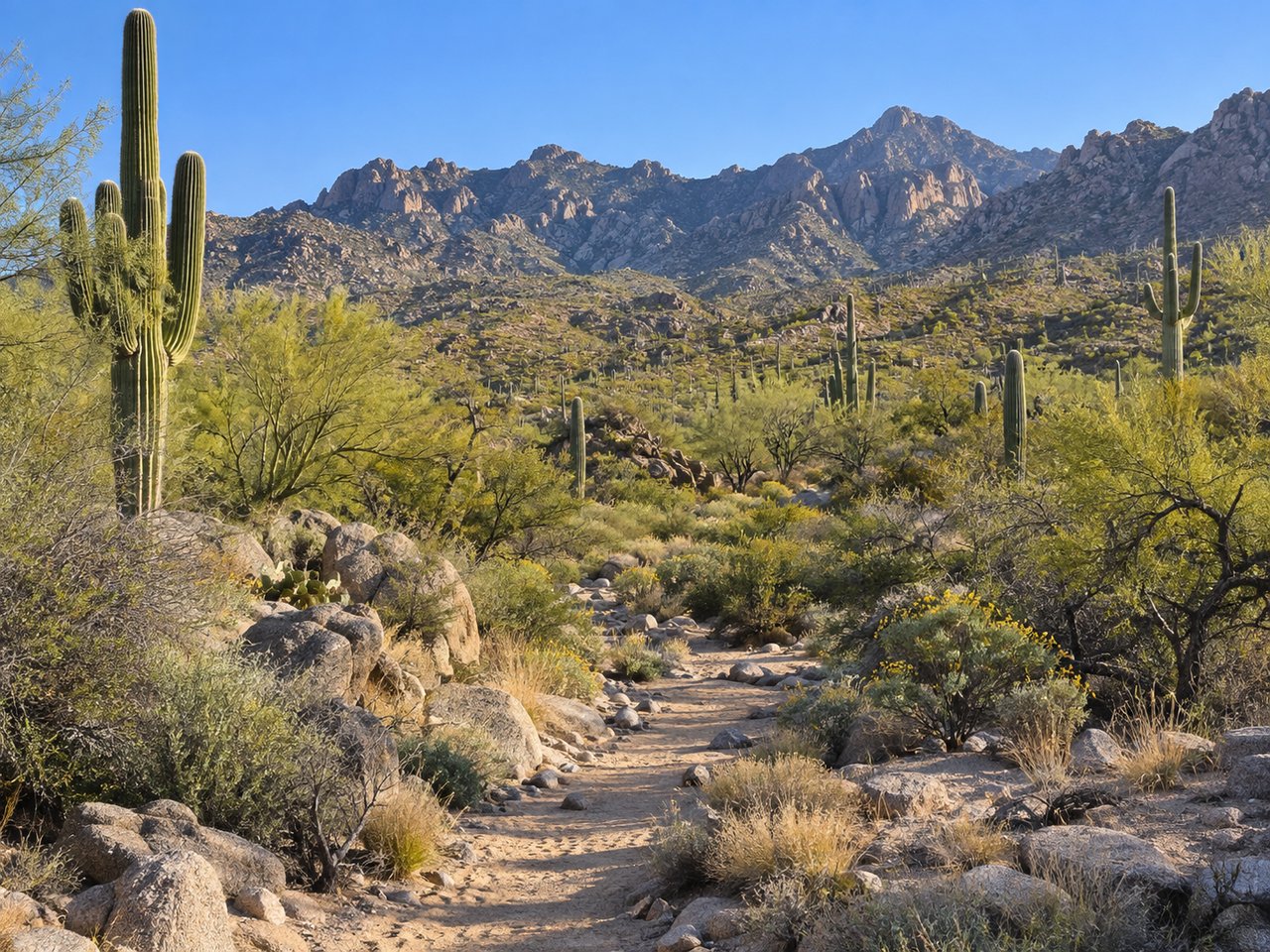
Start with an ecological site inventory. Identify saguaros, mature Palo Verde and mesquite, native groundcover, and any desert washes or riparian corridors. These features shape your layout and often carry cultural and regulatory importance.
Minimize grading and root disturbance. Place the home to avoid mature saguaros and shade trees when possible. If relocation is unavoidable, work with experienced salvage specialists and confirm local permitting before any plant removal or transplanting.
Control invasive buffelgrass early, especially along driveways and near structures. Buffelgrass competes with native species, so management improves safety and long‑term landscape health.
Work with topography and views
Use the site’s highs and lows to unlock views and natural shading. Orient the long axis of the home east to west to minimize harsh exposure from the east and west. Concentrate most glazing on shaded south and north sides, and limit unshaded west‑facing glass.
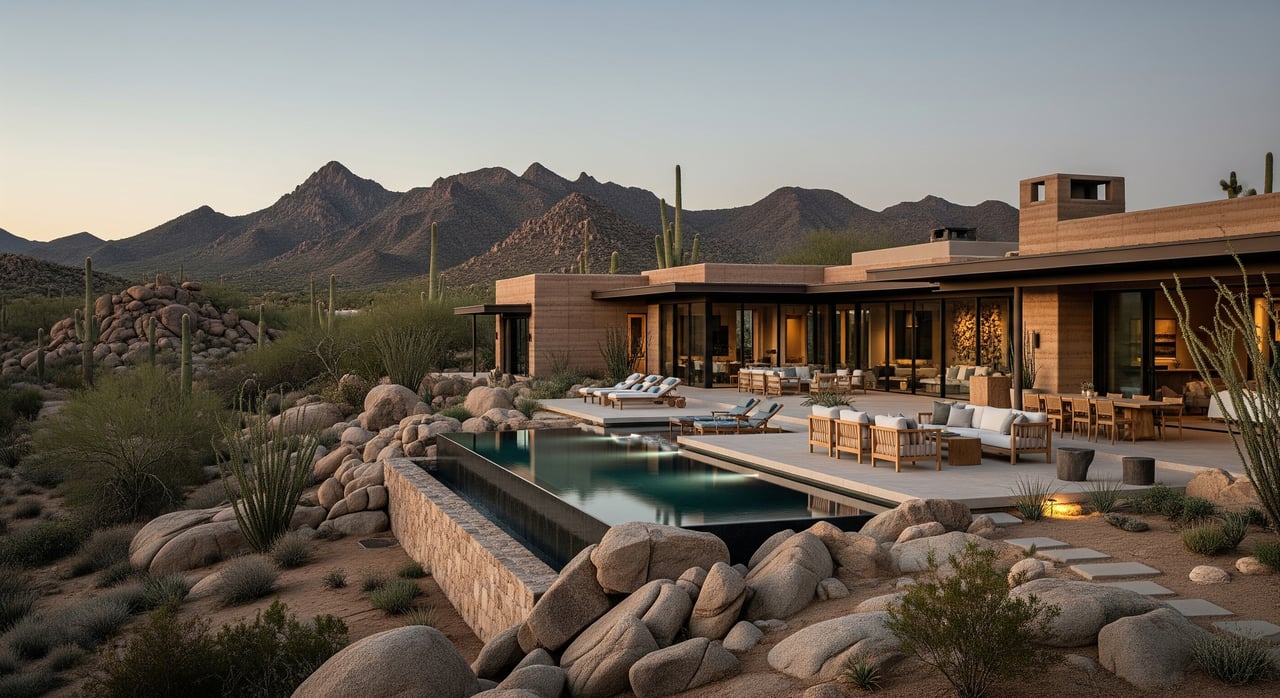
Create shaded outdoor rooms with courtyards, Ramada's, and terraces to enhance your outdoor space. These spaces buffer interiors from direct sun and extend comfortable living outdoors across seasons.
Plan for drainage and monsoons
Avoid building in dry washes or arroyo channels. Even “dry” channels can carry powerful, fast‑moving water during storms. Keep foundations high and rely on on‑site retention and low‑impact methods such as swales, pervious paving, and terraced grading to move water away from the home while preserving natural flow paths.
Confirm floodplain or wash setbacks early with local authorities. Check zoning overlays and conservation areas before you finalize the footprint.
Building envelope and materials for performance
Orientation, glazing, and shading
Design for the sun. Use low‑E, high‑performance windows with thermally broken frames. Size south overhangs to block high summer sun while allowing winter sun to warm interiors. On west facades, use exterior shading such as deep overhangs, trellises, or screens.
Keep west glass to a minimum. If you need view glass to the west, consider adding fixed shading, adjustable screens, or landscape shade to cut late‑afternoon heat.
Thermal mass and insulation
Interior thermal mass helps the home ride out daytime heat. Materials like concrete, masonry, adobe, or tile floors absorb heat during the day and release it when nights cool. Pair mass with excellent insulation and tight air sealing to reduce peak loads and hold cool air overnight.
Engineered masonry, insulated concrete forms, or well‑insulated framed walls with continuous exterior insulation are all effective options. Pay special attention to attic insulation and radiant barriers to keep roof heat from the roof from entering living spaces.
Roofing and exterior durability
Select cool roofing or reflective coatings to lower attic temperatures. If you prefer flat roofs, plan for robust insulation and drainage. For pitched roofs, consider radiant barriers or well‑ventilated assemblies.
Use UV‑stable finishes, corrosion‑resistant flashing, and solid detailing at every penetration. The combination of intense sun, episodic high winds, and dust calls requires materials that can withstand the elements and age gracefully.
Moisture and pests
Monsoon storms can drive water where you do not expect it. Grade for positive drainage away from foundations and detail waterproofing carefully. Flash‑flood awareness is part of good desert building.
Plan for termites and rodents with proper material choices, treated framing where required, and landscape practices that reduce harborage close to the home. Keep irrigation away from foundations and manage plantings thoughtfully.
Cooling, power, and resilience
High‑efficiency HVAC
Modern high‑efficiency heat pumps provide reliable cooling and efficient heating. Variable‑speed, modulating systems handle wide temperature swings while improving comfort and lowering energy use. Short duct runs, sealed ducts, and conditioned mechanical spaces reduce losses.
Zoned systems and smart thermostats help you fine‑tune comfort and energy use. Shading outdoor condensers protects performance during extreme heat.
Passive and hybrid strategies
Take advantage of cool desert nights with night‑flush ventilation when conditions allow. Ceiling fans enhance comfort at higher fan speed settings. Evaporative coolers can be effective in very dry periods, but performance drops when monsoon humidity rises; therefore, many owners rely on heat pumps for consistent results.
Consider cooling the spaces you use most and pairing them with shaded outdoor rooms. This hybrid approach keeps energy use sensible while preserving the desert indoor‑outdoor lifestyle.
Solar and storage readiness
Tucson’s solar resource is strong. If you plan for on‑site solar, route conduits, reserve roof area with ideal orientation, and consider battery storage to reduce peak demand. Early coordination with your utility and design team helps you meet interconnection requirements smoothly.
Water‑wise landscapes that feel like Tucson
Native plant palette
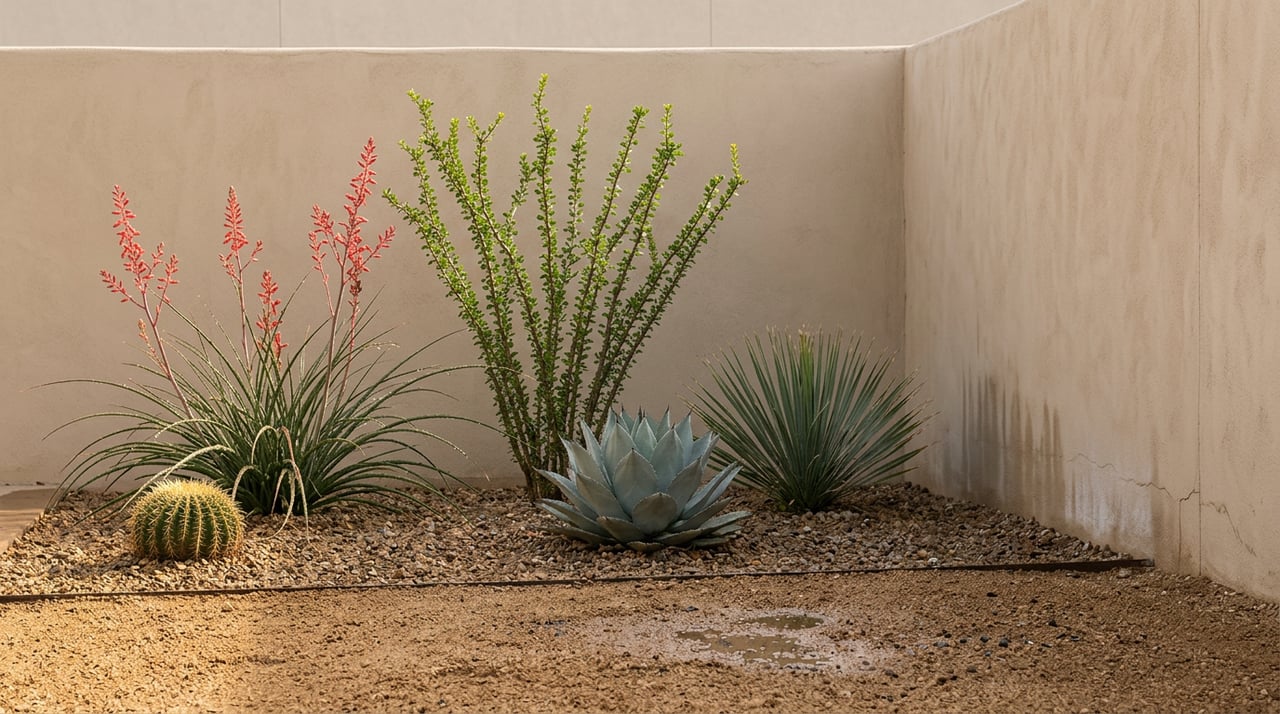
Lean into native and drought‑adapted plants. Saguaro, Palo Verde, mesquite, ironwood, ocotillo, agaves, prickly pear, and brittlebush deliver beauty with low water demand. Group plants by water needs and build micro‑zones where you can apply occasional supplemental irrigation during establishment.
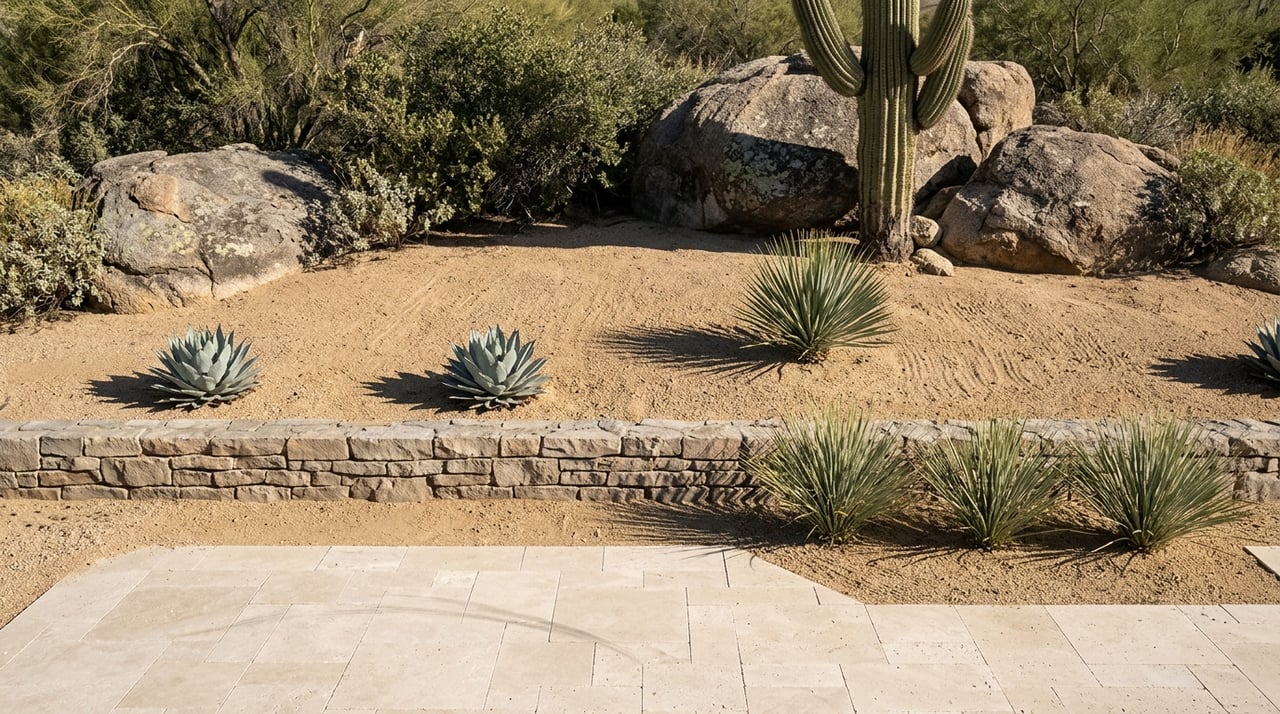
Minimize turf. Use decomposed granite, gravel, and native groundcover to define outdoor rooms. The result looks and feels like the Sonoran Desert while reducing maintenance and water use.
Smart irrigation and harvesting
Use drip irrigation with smart controllers. Subsurface drip in establishment zones reduces evaporation. Capture seasonal rainfall with cisterns, rooftop catchment, and swales to support the landscape between storms.
If you are considering gray water for subsurface irrigation, verify local code and health requirements. Plan the plumbing early so future systems are simple to add.
Permits, costs, and the right team
Permitting checklist
Before designing in detail, confirm zoning and any applicable hillside or conservation overlays. Verify riparian and wash setbacks, floodplain status, and required elevation or retention standards. Understand rules around native plant salvage and saguaro relocation.
Coordinate early on utility needs, especially if you plan solar or storage. Clear guidance up front saves time and reduces costly changes during construction.
Cost drivers and value
Expect higher costs for specialized foundations on rocky or sloped lots, preserving and relocating significant native plants, robust drainage measures, high‑performance envelopes and HVAC, and larger cistern or harvesting systems. These investments typically pay back through lower operating costs, improved comfort, and increased market appeal.
Focus on what endures: shade, insulation, air sealing, smart HVAC, and native landscaping. These elements improve daily life and long‑term value in the desert.
Choose experienced local pros
Hire architects, builders, and landscape designers with documented Tucson and Sonoran Desert experience. Look for teams who understand passive design, plant salvage, invasive control, water harvesting, and local permitting. Engage civil and site engineers early for grading, drainage, and wash assessments.
How Saguaro Ranch simplifies desert building
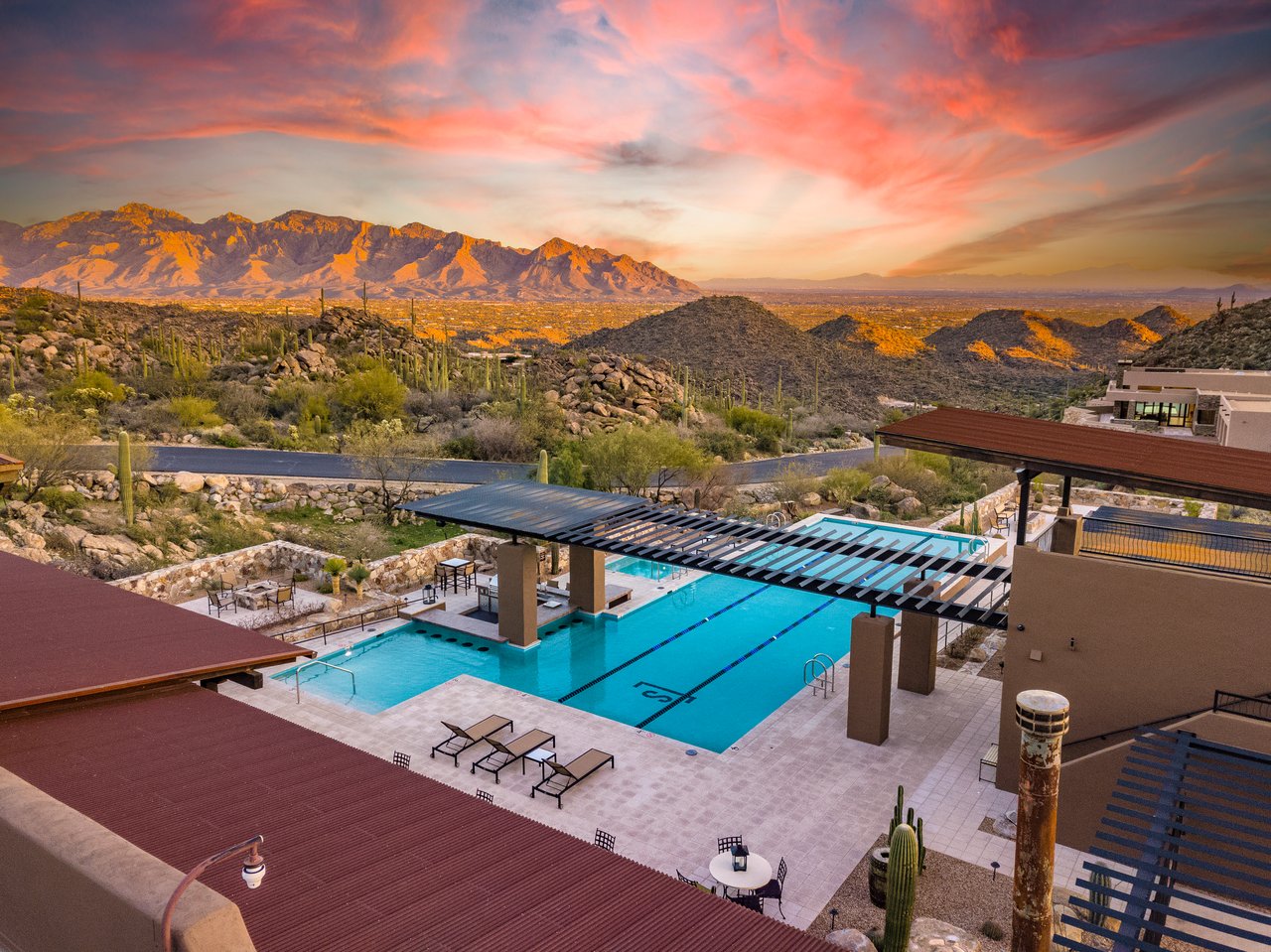
In the Tortolita Mountains north of Tucson, Saguaro Ranch adopts a preservation‑first approach, keeping roughly 80 percent of the land undisturbed. The result is rare privacy, dark‑sky clarity, and homesites that feel immersed in nature rather than imposed upon it.
You can select from one to fourth-acre homesites, pre‑approved semi‑custom plans, select luxury custom homes, or a build‑to‑suit path with endorsed luxury builders. Curated architecture, including plans by Robinette Architects, and preferred builders such as RB Construction help you shorten timelines without sacrificing design quality.
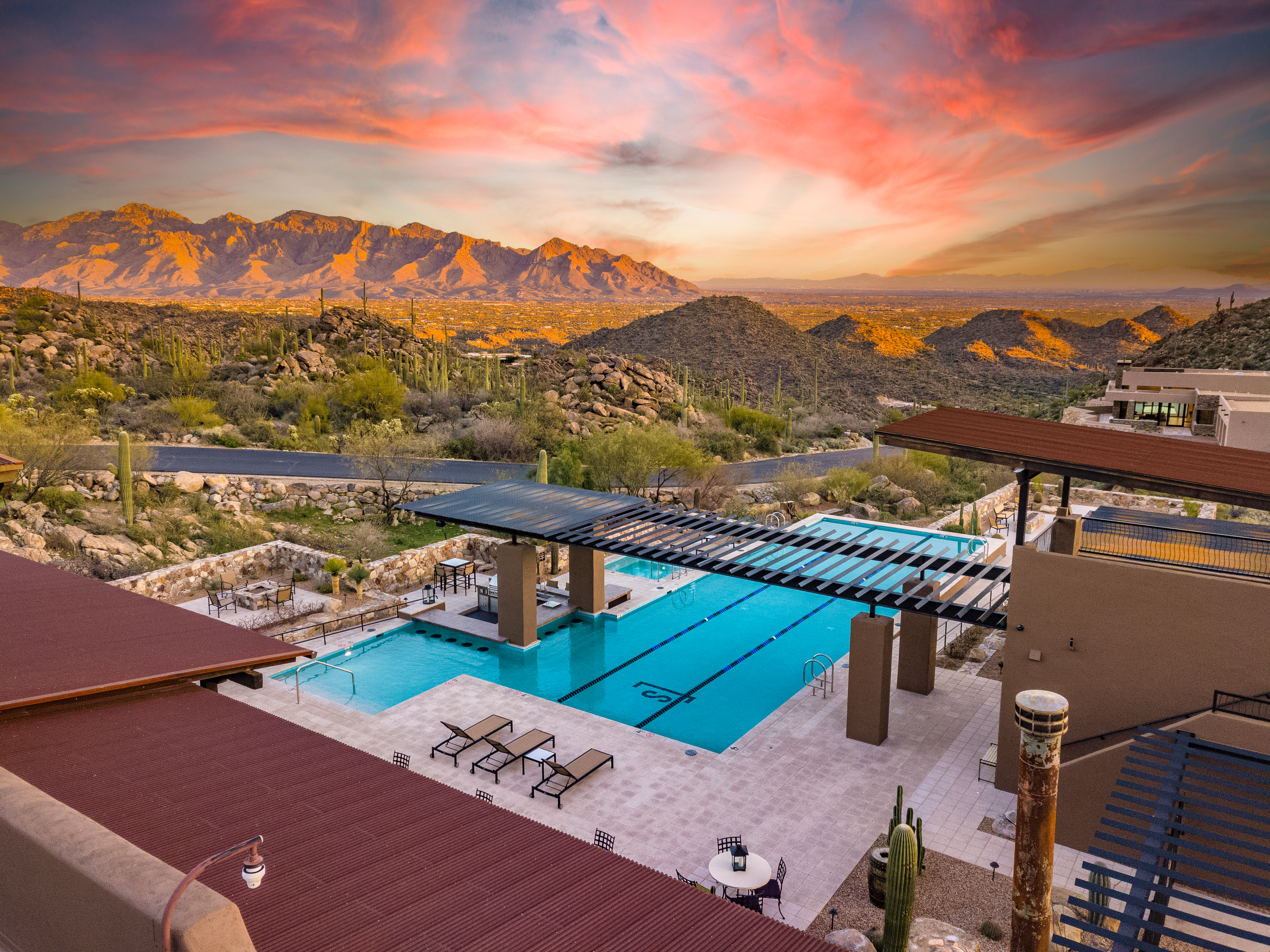
Design guidelines emphasize native landscape, view corridors, and sensitive siting. Community planning integrates thoughtful drainage and low‑impact practices that align with desert conditions. A private clubhouse with fitness, aquatics, and courts adds a wellness layer that complements the quiet of the canyon and ridgelines.
If you want an intentional, streamlined way to build in the Sonoran Desert, this curated model balances stewardship with a refined daily experience.
A practical next‑step checklist
- Walk your site morning and late afternoon to note sun, shade, and prevailing breezes.
- Commission an ecological inventory to map saguaros, native trees, and washes.
- Confirm zoning, overlays, wash setbacks, and any floodplain requirements.
- Align the long axis east to west, and plan shading for south and west facades.
- Choose envelope upgrades first: insulation, air sealing, high‑performance windows.
- Select a high‑efficiency heat pump system with zoning and smart controls.
- Plan roof and electrical pathways for future solar and battery storage.
- Design a native, low‑water landscape with drip irrigation and rainwater capture.
- Set a buffelgrass control plan for driveways and defensible space.
- Interview local desert‑experienced architects, builders, and landscape designers.
Building in the Sonoran Desert rewards thoughtful design. When you respect the climate, protect the land, and invest in performance where it matters, your home will feel cool and calm in summer, cozy on winter nights, and resilient in storm season. If you want a setting that already honors these principles, consider exploring the curated homesites and pre‑approved plans north of Tucson.
Ready to experience it firsthand? Schedule a Private Visit at Saguaro Ranch.
FAQs
What makes Tucson’s climate unique for home design?
- Tucson experiences hot, dry summers, a pronounced monsoon season with short, intense storms, mild winters, and cool nights that support night ventilation and thermal‑mass strategies.
How should I orient a new home in Pima County?
- Run the long axis east to west, minimize west‑facing glass, place most glazing on shaded south and north sides. The size of the south overhangs to block high summer sun.
What do I need to know about desert washes?
- Avoid building in washes or arroyo channels. Confirm setbacks and floodplain status early and use on‑site retention and low‑impact drainage to protect foundations and natural flow.
Are evaporative coolers a good choice in Tucson?
- They can work well in very dry periods, but performance drops during monsoon humidity, so many owners rely on high‑efficiency heat pumps for consistent comfort.
Which landscape plants reduce water use in Tucson?
- Use native and drought‑adapted species like saguaro, palo verde, mesquite, ocotillo, agaves, prickly pear, and brittlebush, grouped by water need with drip irrigation.
How do I manage buffelgrass around a new build?
- Identify and remove buffelgrass near structures and access routes, then maintain regular control to reduce wildfire risk and support native plant communities.
What drives costs when building in the Sonoran Desert?
- Preserving or relocating significant native plants, hillside or rocky foundations, robust drainage and floodproofing, high‑performance envelopes and HVAC, and water harvesting systems are common cost drivers.