What will it really cost to build your luxury home in Tucson? If you have heard everything from modest estimates to eye-popping numbers, you are not alone. Building in the Sonoran Desert adds unique variables that can widen budgets fast, especially on view lots and hillside sites. In this guide, you will see where the money goes, realistic per-square-foot ranges, timelines, and smart ways to invest where it matters while keeping total spend in check. Let’s dive in.
Tucson cost drivers you should know
Sitework and grading
Sitework can be a silent budget mover in Pima County. Steep or rocky lots in the foothills often require rock excavation, engineered retaining walls, and special foundations that add tens to hundreds of thousands of dollars. Long or sloped driveways, drainage design, and trenching for utilities increase costs further. If the site needs a septic system or water line extension instead of standard connections, plan for added scope.
Structure and exterior shell
Complex roof lines, large cantilevers, and multi-level designs elevate labor and engineering. Steel or custom timber framing for big spans in great rooms or glass walls costs more than standard wood framing. Exterior cladding choices such as stone veneer, high-end stucco systems, and metal accents can enhance durability and design but also increase the budget. Simplifying roof geometry and wall assemblies can yield significant savings without compromising quality.
Glazing and big openings
Views are a major reason you build in Tucson. Large sliding or folding glass walls and steel or aluminum frames are premium items. High-performance glazing with low-E coatings and thermally broken frames is essential in this hot desert climate, and it carries a higher initial cost. The more glass and the more custom the sizes, the higher the budget, so strategic sizing and shading make a difference.
Interiors and custom millwork
Custom cabinetry, built-ins, stone flooring, specialty plaster, and luxury appliances are key elements that drive a luxurious look. The labor for bespoke millwork and on-site finishing adds up quickly. You can match the feel of custom with semi-custom modules in many areas and reserve full bespoke elements for focal areas such as the kitchen, entryway, and primary suite.
Outdoor living and pools
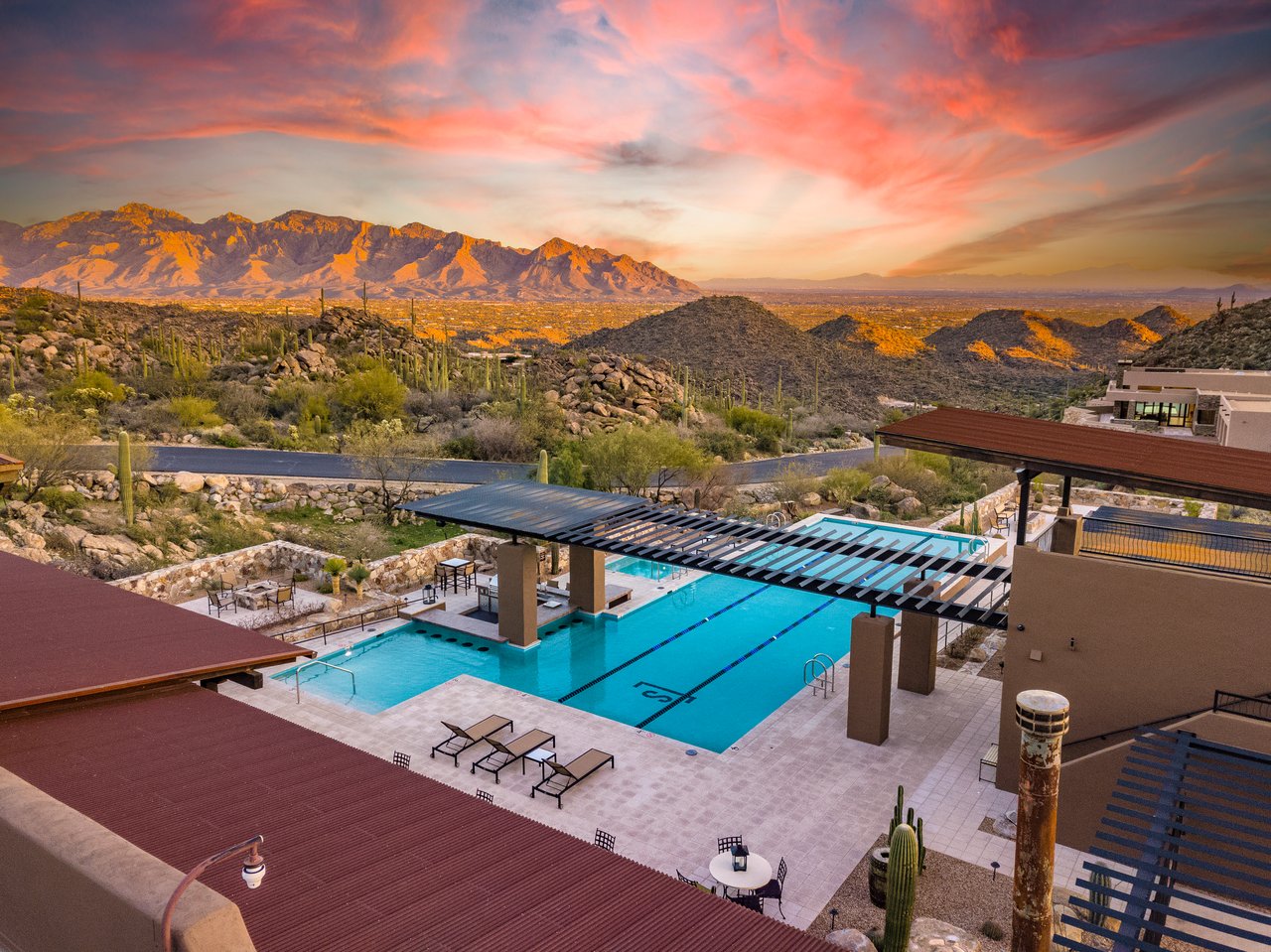
Outdoor rooms are part of daily life here. Pools, spas, outdoor kitchens, terraces, fire features, shade structures, and lighting can represent a large share of the total cost. On hillside lots, retaining walls and tiered patios add structural requirements beneath the finishes. Pool shell size, infinity edges, water features, tile selections, and automation all scale budgets.
Energy, HVAC, and MEP systems
Cooling drives energy use in Tucson, so right-sizing efficient HVAC and improving the building envelope are smart investments. Variable-speed systems, high-performance glazing, and thoughtful shading can reduce operating costs. Solar PV performs well in this region; batteries and whole-home electrification add first cost but can support resilience goals.
Soft costs and contingencies
Architecture, engineering, surveys, energy modeling, and permits are significant in custom work. Plan reviews and, in some neighborhoods, design review committees add time and fees. A well-structured contingency helps you handle unknown site conditions or owner-driven upgrades without stress.
Per-square-foot ranges to plan by
Per-square-foot numbers are planning tools. Your final cost depends on the site, design, and selections. Typical Tucson luxury ranges as of recent market conditions:
- Upper-end luxury with complex sites, custom glazing, bespoke millwork, pool, and extensive landscape: $450 to $800+ per sq. ft.
- High-quality custom with premium materials and fewer complex details: $350 to $550 per sq. ft.
- Upscale but less complex, with strategic finish choices: $300 to $400 per sq. ft.
These ranges generally include hard costs and typical soft costs but exclude land. Smaller high-end homes often show higher per-foot costs because fixed expenses are spread over fewer square feet. Large glass packages, steel frames, and intricate outdoor living can move a project toward the upper end.
Example budgets for context
- 4,000 sq. ft. luxury home on a relatively flat infill lot with high finishes and a modest pool: plan roughly $3M to $5M+ for construction plus typical soft costs, plus land.
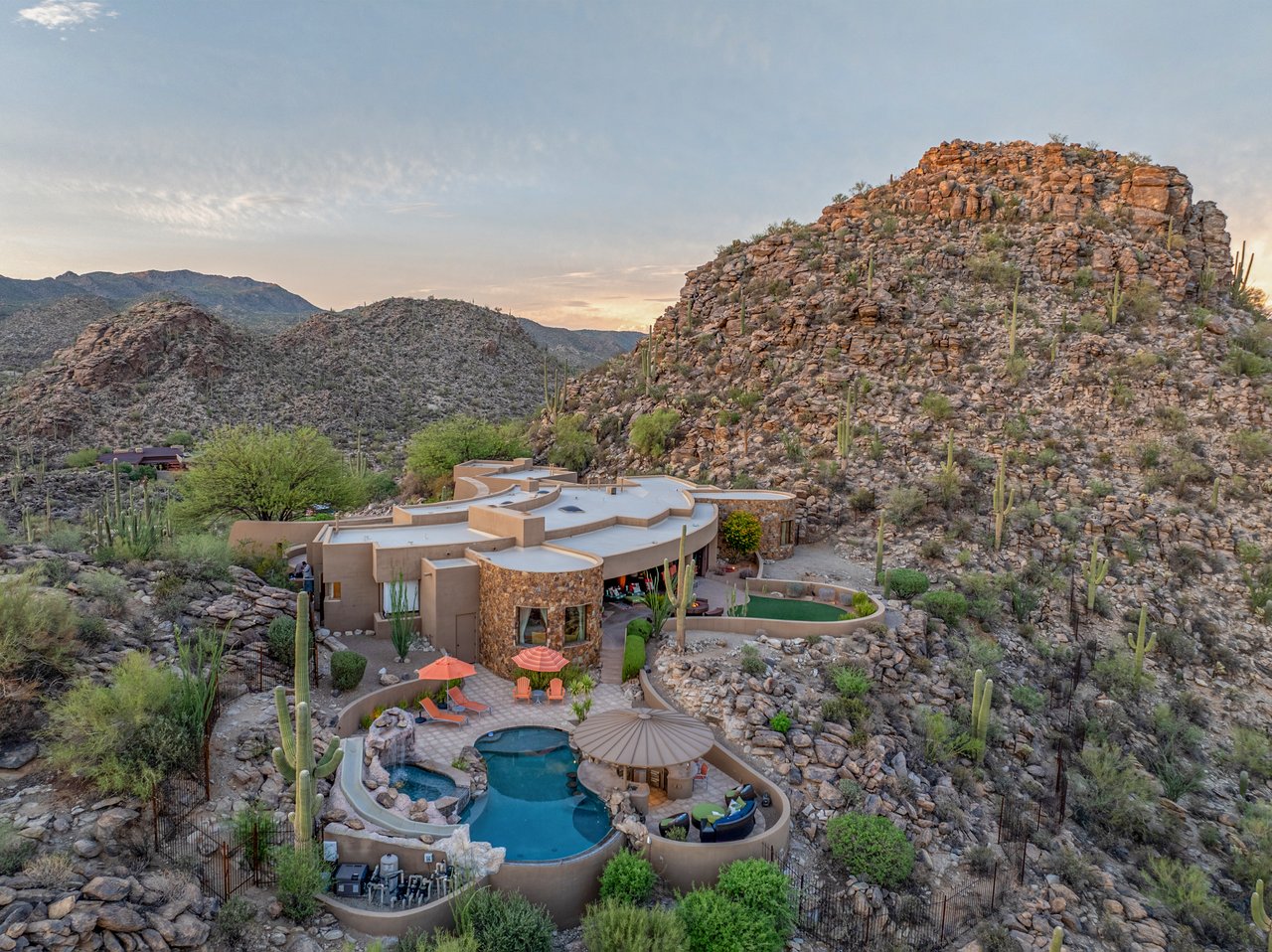
- 6,500 sq. ft. resort-style home on a Catalina Foothills hillside with major grading, retaining walls, steel glazing, custom millwork, extensive landscape, and a large pool: plan roughly $5M to $7M+ for construction plus typical soft costs, plus land.
These scenarios illustrate how site complexity and outdoor scope shape totals as much as interior finishes.
Build timeline from concept to keys
A realistic schedule reduces surprises and holding costs:
- Schematic design and early budgeting: 1 to 3 months
- Design development, construction documents, and selections: 3 to 6 months
- Permitting and any POA or design review: 1 to 6+ months
- Construction: 9 to 18 months depending on scope and site
From first ideas to move-in, you commonly see 12 to 30 months. Hillside work and highly bespoke elements trend toward the longer end.
Permits and approvals with the Town of Marana
Your permit authority will be the Town of Marana, depending on the site. Permit and plan review fees typically follow a valuation schedule, and impact fees may apply. Many luxury neighborhoods use design review committees that can add time and request revisions, so build that into your plan. Early coordination with civil and geotechnical consultants helps minimize later change orders.
Cost-control strategies that keep quality
You can keep the look and performance you want while managing total spend. Consider these levers:
- Simplify massing and roofs to lower framing and roofing labor.
- Right-size and standardize windows where possible, and pair quality glazing with smart shading.
- Use semi-custom cabinetry for most spaces and reserve full bespoke detailing for signature areas.
- Integrate passive design early with orientation, overhangs, and shading to cut cooling loads.
- Phase outdoor amenities, completing core landscape now and a complex pool or terraces later.
- Use engineered trusses or panelized components when appropriate to reduce waste and timelines.
- Finalize major selections before bidding to avoid premiums from change orders.
Local checks to run early
A few early steps can save months and money:
- Confirm utility availability, including electricity, water, sewer, and any need for septic.
- Order a geotechnical report, especially for hillside or rocky sites.
- Review any HOA or design guidelines and approval timelines.
- Plan for water-wise landscaping and irrigation that aligns with desert conditions.
Financing and contingency basics
If you use a construction loan, you will need a detailed budget and draw schedule. Lenders expect realistic soft cost allocations and contingencies. As a rule of thumb, set aside at least 5 to 10 percent for contingency on well-defined projects and 10 to 15 percent when site conditions or scope are evolving. Remember to budget for furnishings, window treatments, and landscape beyond the pool or patios.
Frequently Asked Questions
How much does it cost to build a house in Tucson, AZ?
Building a custom house in Tucson, AZ typically ranges from $300 to $800+ per square foot. Total custom home construction costs generally start around $1.2M to $3.5M for upscale builds, while the total cost to build a luxury home or high-end estate on complex hillside sites frequently ranges from $3 million to $7 million+, excluding land.
What is the average custom home construction cost per square foot in Tucson?
The cost to build a house in Tucson typically breaks down into three tiers: upscale custom builds average $300 to $400 per sq. ft., high-quality custom homes range from $350 to $550 per sq. ft., and high-end luxury custom homes with complex architecture and bespoke finishes range from $450 to $800+ per sq. ft.
How much to build a house in Tucson on a hillside lot?
Building on a foothill or hillside lot in Greater Tucson increases sitework costs due to required rock excavation, engineered retaining walls, drainage systems, and specialized foundations. Sitework alone for hillside sites in Pima County often adds $100,000 to $500,000+ to the overall build budget.
What drivers shape the overall cost to build a luxury home or high-end home?
Key drivers for high-end home construction costs in Tucson include site terrain complexity, structural steel or timber framing, expansive energy-efficient glazing packages, custom millwork, variable-speed HVAC systems, and luxury outdoor living spaces featuring pools, spas, and outdoor kitchens.
Location and Community Fit
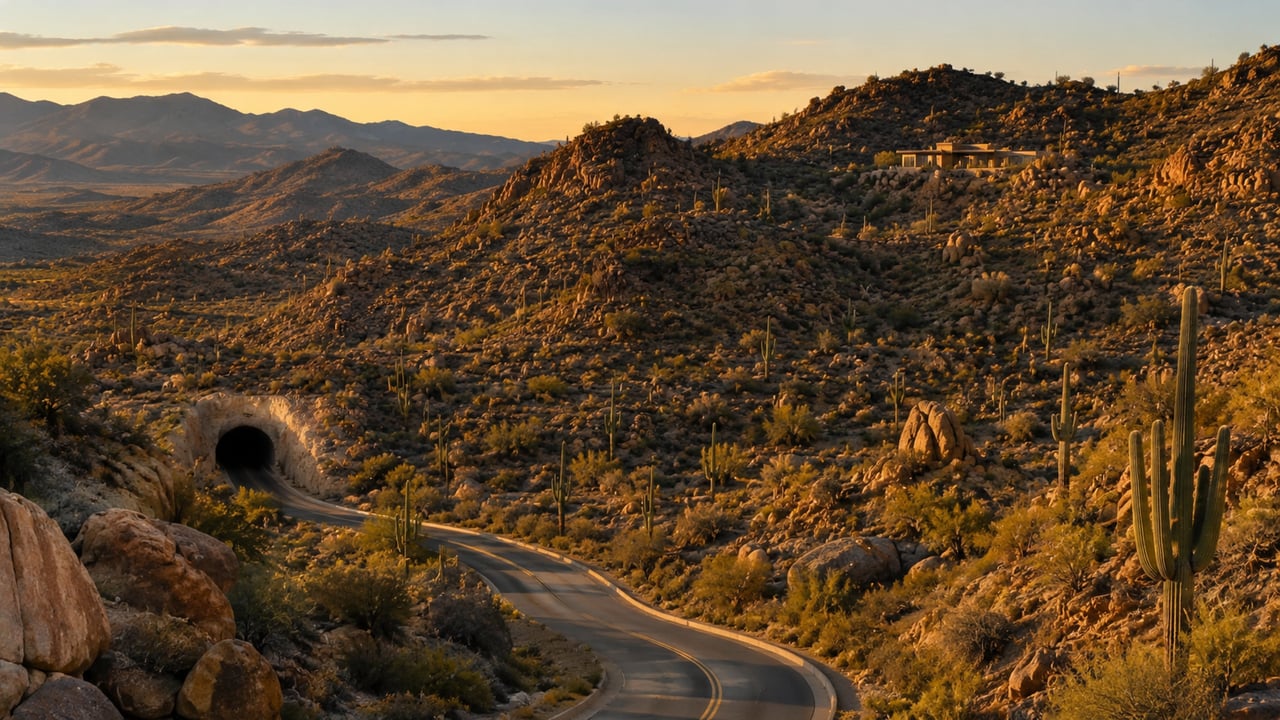
Where you build in Greater Tucson affects both cost and experience. Hillside view lots may require more engineering, while curated communities with established design standards can streamline delivery. If you prefer a private, conservation-forward setting with design guidance and secure access behind the Saguaro Ranch tunnel entrance, a curated environment can reduce uncertainty..
If you want help pairing a dramatic desert site with a predictable, high-design build process, explore the experience at Saguaro Ranch. With preserved Sonoran Desert landscapes, pre-approved architectural plans, and preferred builders, you can focus your budget on the details you love and move from vision to home with confidence.